Swimwear has an unfair reputation for exposing every supposed flaw, when much of the discomfort comes from ordinary construction problems: straps that do not adjust far enough, elastic that cuts in, cups placed in the wrong spot, or a one-piece built for a different torso length. A good swimsuit fit guide begins with what the suit does while you move, not with a list of body types that are supposedly permitted to wear it.
Start with movement and the job the suit has to do
Before choosing colors, cutouts, or a dramatic neckline, decide where this swimwear will actually be used. Lounging beside a pool, swimming laps, chasing a child at the beach, and spending a day on a paddleboard create different demands. A string bikini may be perfectly comfortable for reading in the shade and deeply irritating when a wave shifts the top sideways. There is no prize for selecting a suit that makes your plans harder.
Try the basic movement test in the fitting room. Raise both arms, squat, twist at the waist, sit on a bench, and lean forward as if picking up a towel. The suit should remain where it began. A little settling is normal; a top that rides up, a bottom that rolls, or a one-piece that pulls sharply at the shoulders is a fit issue. It is especially tempting to ignore these signs when a suit looks good in a still mirror, but water makes small problems more obvious.
For swimwear body proportions, identify the non-negotiable point first. It may be bust support, a longer torso, coverage through the seat, room at the ribcage, or straps that do not press on the neck. Start there and let style follow. A beautiful print cannot solve an underband that shifts every time you inhale.
Torso length changes how one-pieces and tankinis feel
One-pieces are often discussed as though they have one universal fit, but torso length changes the whole experience. If a suit tugs at the shoulders, pulls the leg openings upward, or creates horizontal tension across the front, it may be too short through the body. Sizing up can add length, but it can also leave gaps at the bust and sides. Look for long-torso versions, adjustable straps, a higher back, or a suit with enough stretch recovery to accommodate vertical length without becoming baggy in the water.
A short torso creates a different set of choices. High-cut legs, a high neckline, and a dense belt detail may all compete within a small vertical space if they sit close together. That does not make them forbidden; it means you should examine where each line lands. A simple scoop neck and a clean side seam can feel less busy. A bikini separates top and bottom sizing, which is often useful when the torso is not the limiting measurement.
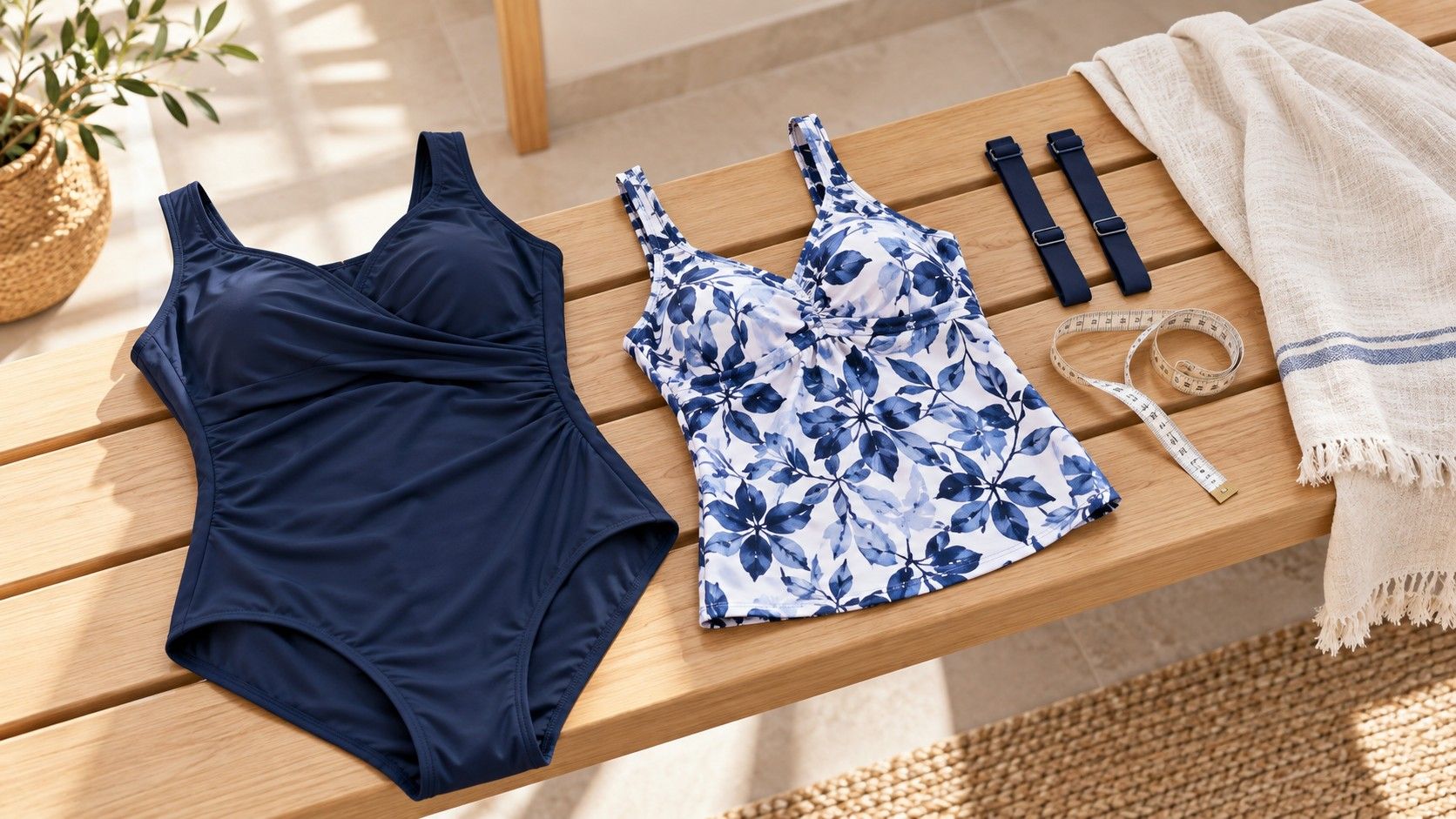
Tankinis can be practical for people who want the flexibility of separate pieces but prefer more coverage around the middle. Check the overlap between the top and bottom while your arms are raised. Some tops float upward in water or bunch at the waist, especially if the hem is only barely long enough. A longer tankini with an internal shelf bra may solve the coverage question, but only if the shelf actually sits under the bust rather than halfway across it.
Support is more than a cup letter
For a fuller bust, the most useful swimsuit details are often an anchored underband, a cup that encloses rather than merely covers, and straps that can be adjusted independently. A halter can look appealing but sends most of the load to the neck. Wear it for a few minutes, not ten seconds. If you feel the pressure before leaving the fitting room, it will not become charming after an afternoon in the sun.
Underwire is helpful for some people and unnecessary for others. A well-designed non-wired top can offer excellent support through a firm band, seamed cups, and wide adjustable straps. Conversely, an underwired top with a loose band will still move. Fasten the band on the loosest comfortable hook when new; it should be level around the back and resist being pulled far from the body. This gives the elastic room to relax over time.
For a smaller or more widely spaced bust, removable pads can add shape or simply create annoyance. Check whether they stay flat and whether the cup seam sits where your breast tissue actually is. Many bathing suits for body type guides promise that ruffles, plunges, or molded cups create a certain effect. The more useful question is whether you like the effect and whether the fabric stays put when you swim.
| Fit concern | Details worth trying | Check before keeping it |
|---|---|---|
| Long torso | Long-torso cut, adjustable straps, high back | No shoulder pull or upward drag at leg openings |
| Need for bust support | Firm band, seamed cup, underwire or shelf bra | Band stays level when arms are raised |
| Separate top and bottom sizes | Bikini or tankini set sold as separates | Both pieces stay secure during a squat and twist |
| Coverage without bulk | High-rise bottom, longer tankini, fuller seat | Elastic does not roll or cut after sitting |
| Active water use | Sport straps, higher neckline, secure closure | Nothing shifts during a brisk movement test |
Test straps, leg openings, and the back from more than one angle
Straps are small but decisive. They should be snug enough to stabilize the cup without making grooves in the shoulders. If they are adjustable, move them one setting tighter and looser before deciding. A cross-back style may distribute weight well, while a narrow halter can strain the neck. If the front fits but the straps are already at their tightest setting, the band or cup shape may not be right for you.
Leg openings deserve the same scrutiny as a waistband. The correct opening does not have to be high, low, or cut in any particular way; it should lie flat without digging, gaping, or migrating. Walk and sit. A seam that feels fine standing may pinch at the crease of the hip once you sit on a towel. In a lined suit, check whether the lining pulls separately from the outer fabric, which can create a visible ripple and an uncomfortable tug.
Use a three-way mirror or a quick phone photo for the back. This is not an exercise in finding faults. It shows whether the back band is level, whether the seat coverage stays in place, and whether ties or hardware sit where they will press against a chair. A suit that works from the front but needs constant checking behind you is not a reliable beach companion.
Color, pattern, and cut are preferences, not camouflage duties
Swimwear for body shape is often sold through camouflage language: hide this, minimize that, create curves, narrow those. That advice can make shopping feel like a defensive operation. Patterns and color blocks are better treated as design choices. A bold floral print may be the reason you reach for a suit. A solid dark one-piece may feel elegant and simple. Neither has to correct anything.
There are practical considerations. Pale fabrics can become more transparent when wet, and white lining can show through a saturated color. Large placement prints may shift visually when stretched across different areas of a suit. Try the swimsuit under bright fitting-room light and, if possible, dampen a discreet edge only where store policy allows. Darker does not automatically mean more secure; opaque fabric and a proper lining do that work.
Cutouts, belts, ruching, and contrasting panels can be enjoyable if they do not interrupt comfort. Ruching may provide a little extra fabric over the front, but it can also bunch after a swim. A belt can define a look and then twist. Treat these details as something to test, not as a solution assigned by a body-type chart.
Choose the suit you will wear without negotiating with it
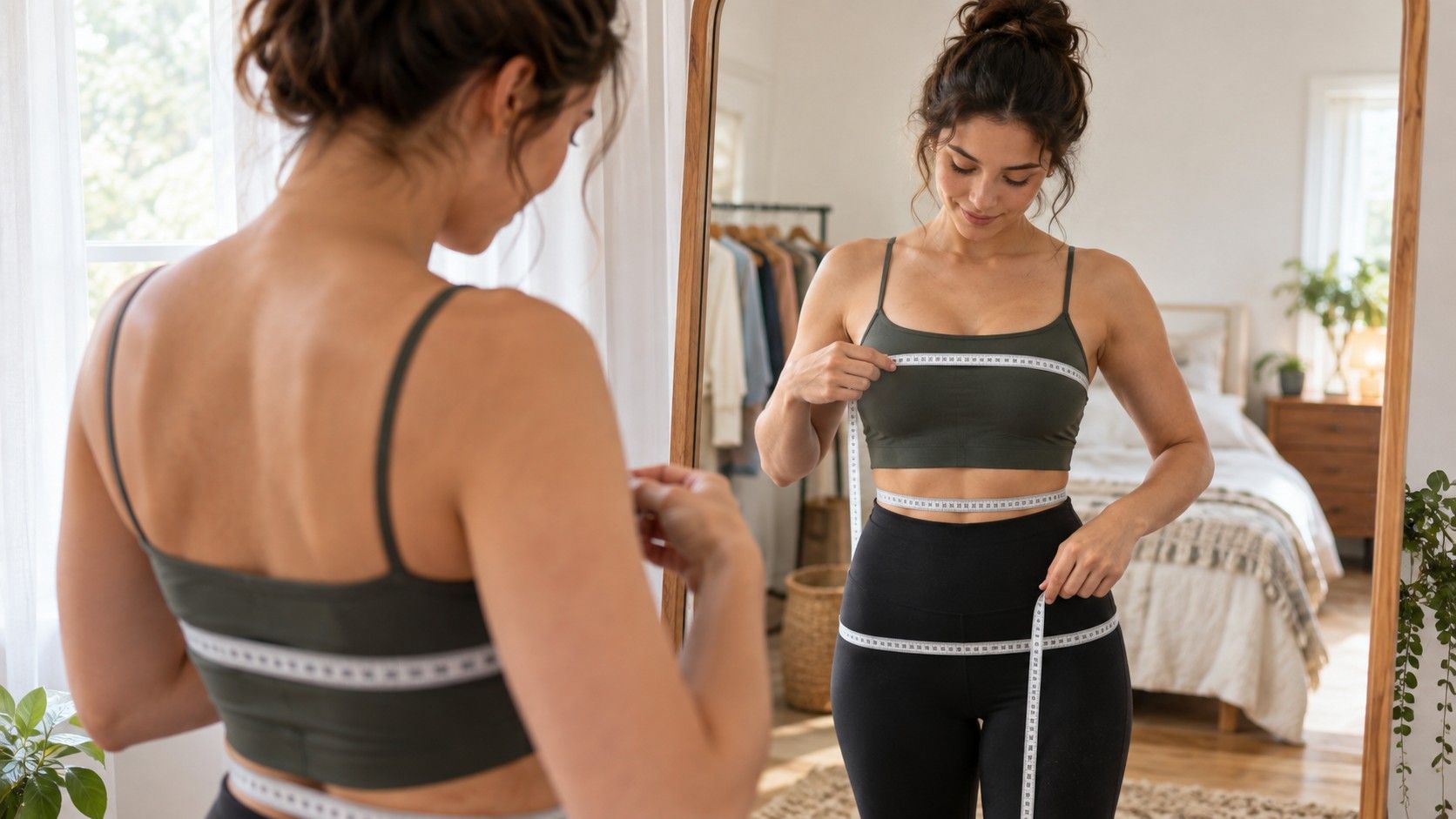
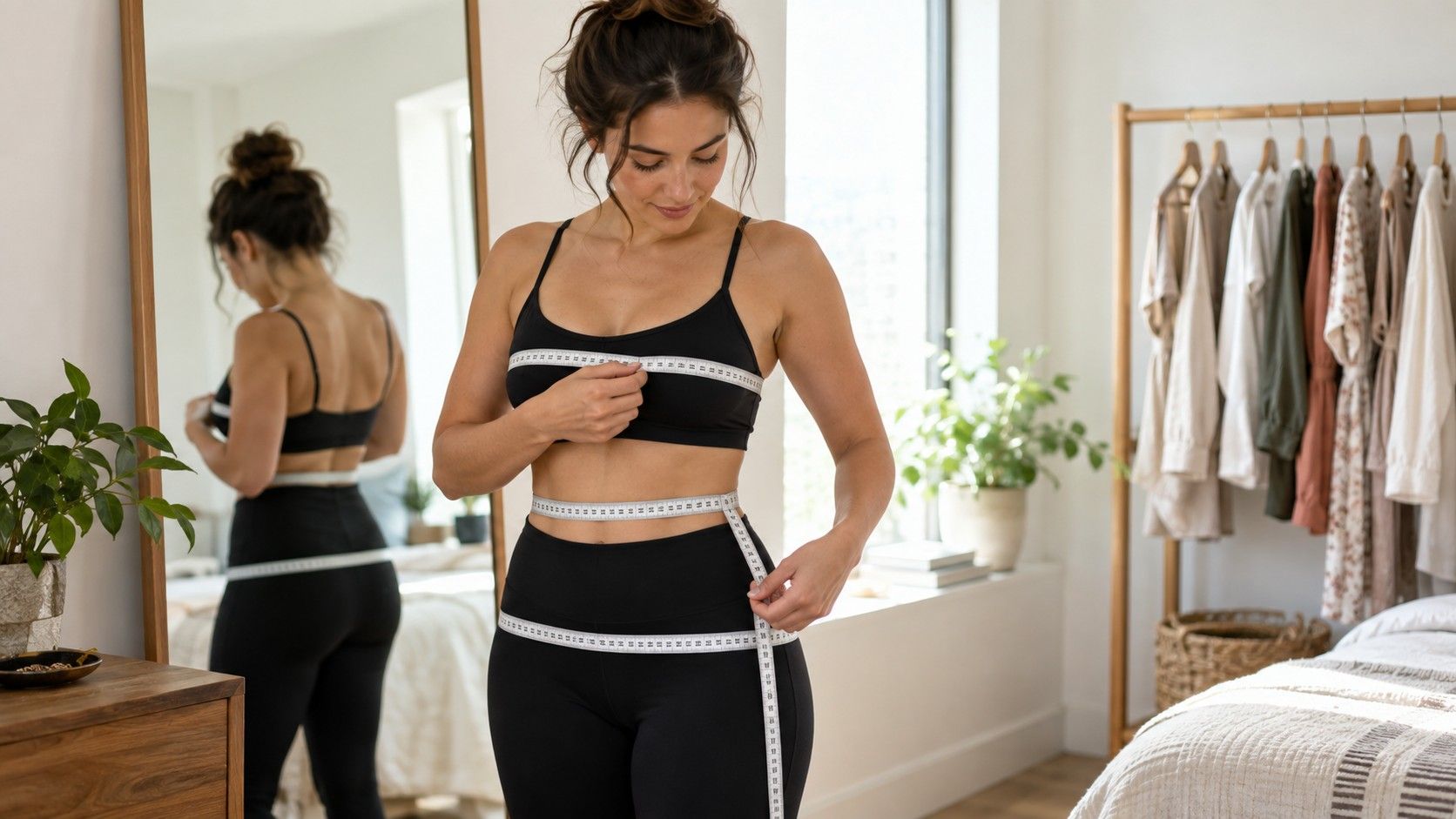
When choosing a style, imagine the least glamorous part of the day: carrying snacks, using a public changing room, climbing a ladder out of a pool, or sitting in a wet suit on a car seat. A suit that handles those moments is more valuable than one that only wins the first mirror check. If you buy online, measure your bust, underbust, torso, waist, and hips, then compare them with the brand chart instead of relying on your usual dress size.
Order two likely sizes when returns are manageable, and try them on indoors with the tags attached. Note where the elastic sits, whether the lining feels substantial, and which suit you stop thinking about after five minutes. That last detail is underrated. The right swimsuit fit is usually quiet: it allows you to swim, move, and take up space without turning the day into a series of adjustments.
A fit-first approach leaves room for every aesthetic choice. You can prefer a bikini, a one-piece, a tankini, a rash guard, or something more covered. The useful standard is not whether the suit flatters a diagram. It is whether its proportions and construction let you enjoy the water on your own terms.