Apple body shape outfits are often sold with an anxious promise: disguise the middle, create a waist, show your legs. That language makes getting dressed sound like a correction exercise. A more useful approach starts with ease. If you tend to carry visual or physical fullness through the midsection, perhaps with comparatively noticeable shoulders, bust, or legs, clothes need enough room to move without losing their line. The goal is not an illusion. It is an outfit that feels settled from the first coffee of the day to the chair at dinner.
What the apple label leaves out
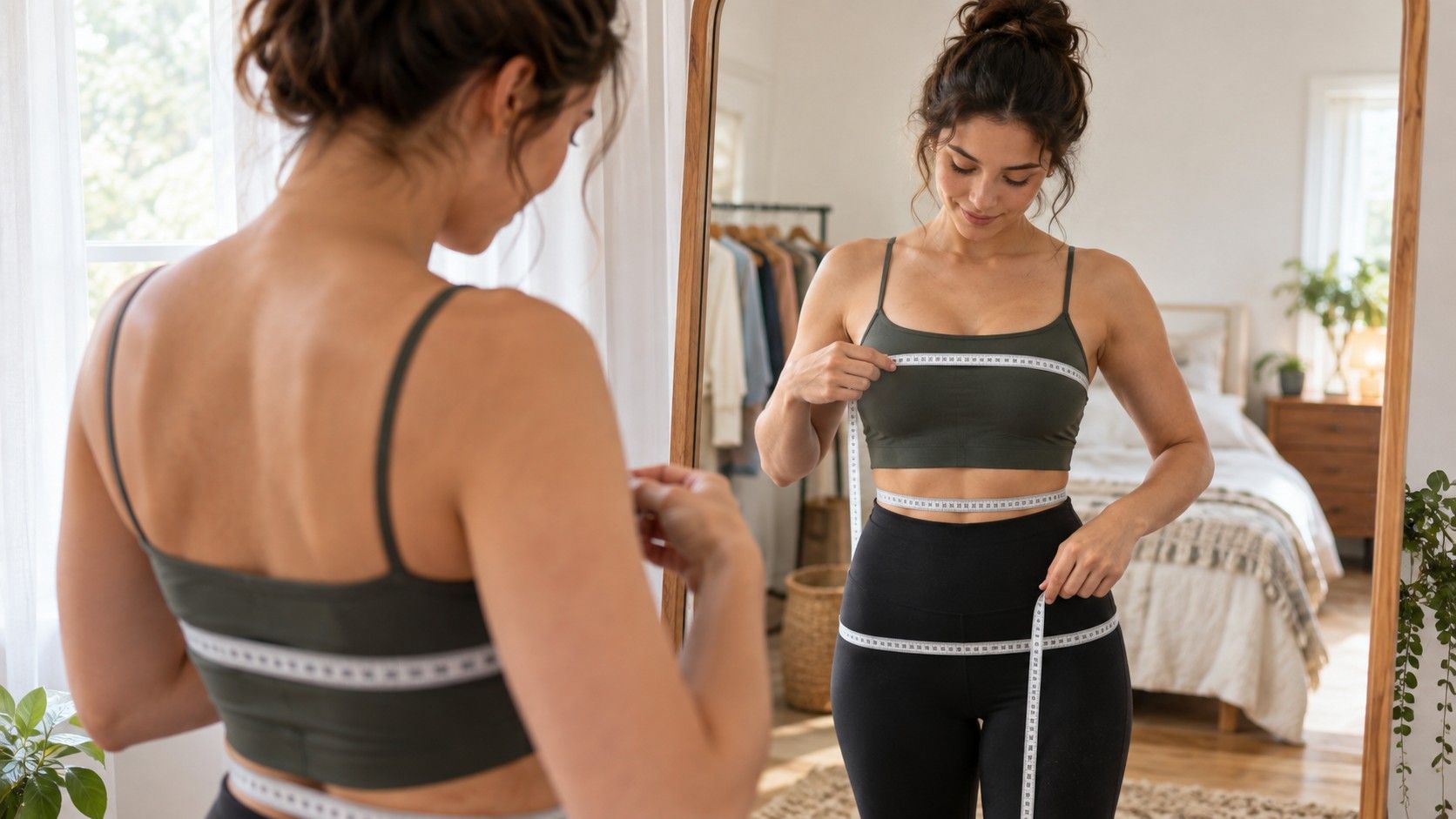
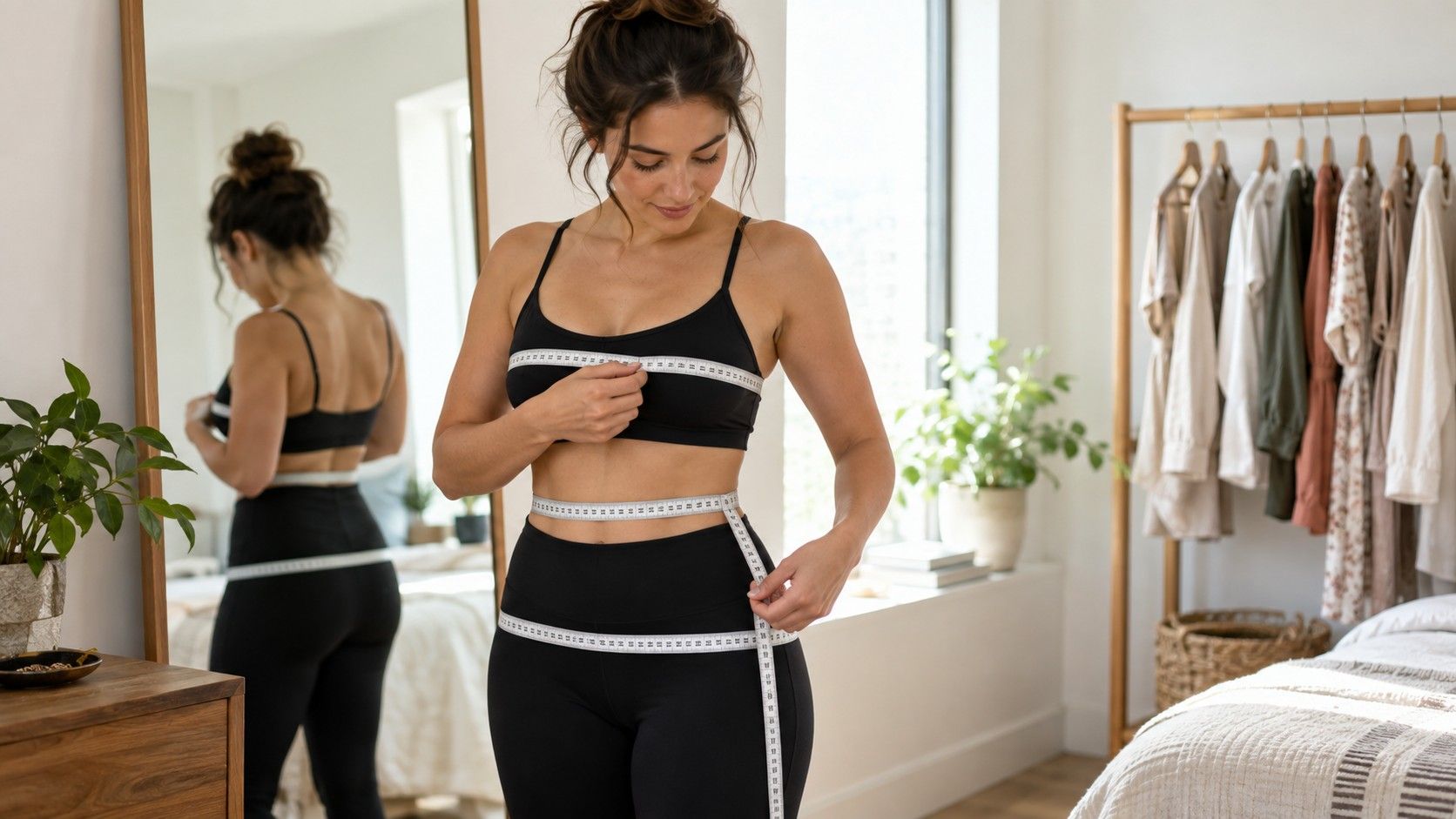
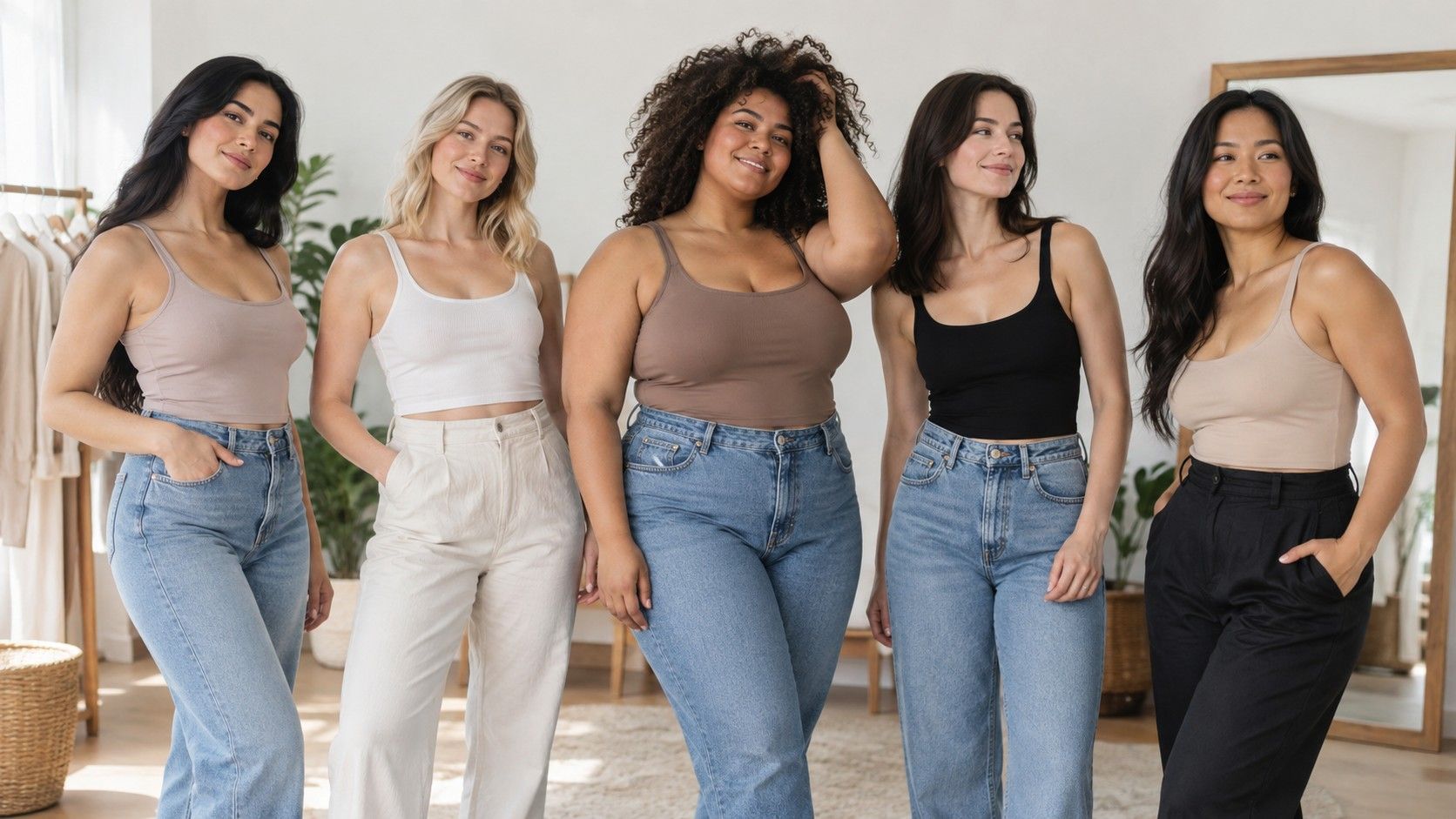
Apple is a broad description of proportions, not a complete fit profile. Two people may both use the word and have very different needs: one may have a full bust and narrow hips, another broad shoulders and slim legs, another a short torso with a straighter waist. Weight changes, posture, and bra fit can alter the outline too. That is why a body-shape chart can be useful as a prompt but unhelpful as a prescription.
Instead, notice the places where a garment asks for more from you than it gives back. Does a shirt pull across the bust when you sit? Does a dress twist because the waist seam is sitting too high? Do trousers feel fine standing but press at the front after ten minutes at a desk? Those are fitting questions with practical answers. They matter more than whether the item performs a familiar apple shape clothing trick in a product photo.
Choose ease before trying to create an illusion
Ease is the space between your body and a garment that allows you to breathe, bend, and move. It is not the same as wearing everything oversized. A woven shirt can have enough ease through the bust and midsection while still fitting cleanly at the shoulder. A knit dress can skim rather than grip if the fabric has weight and recovery. The good test is simple: put the piece on, sit down, take a deep breath, and reach for something above shoulder height. The garment should return to place without constant rearranging.
Many people size down in a relaxed top because the shoulder looks better, then spend the day pulling the front away from their body. Others size up until the middle feels free but the neckline slides back. Look for cuts that solve both areas: a dropped shoulder with a stable neckline, a shirt with a back pleat, a soft V-neck with enough width through the body, or a jacket designed to be worn open. Clothes for apple body shape do not have to be shapeless to be comfortable.
| Piece to try | Comfort check | Detail worth watching |
|---|---|---|
| Straight trousers | Sit for several minutes; the rise should not dig in or roll. | A flat front and a stable waistband often matter more than a narrow leg. |
| Column dress | Walk and climb a stair without the fabric catching at the middle. | Look for substantial fabric or a lining that helps the dress fall cleanly. |
| Open cardigan | It stays on the shoulder and does not bunch behind the arms. | Side slits and a clean front edge make layering easier. |
| V-neck top | The neckline stays in place when you bend forward. | The shoulder seam should not slide down the arm. |
Necklines and shoulders set the tone of the outfit
Because the upper body may be a strong visual area, neckline and shoulder construction can change how an outfit feels before you even consider the waist. V-necks, open collars, scoop necks, and soft square necks can provide space around the face if you enjoy that effect. A crew neck can be equally good when the fabric is fine and the fit through the shoulder is accurate. There is no need to avoid one neckline forever; try it with your usual bra and see whether it stays comfortable through movement.
Check the shoulder seam in a mirror from the side. It should usually land near the shoulder point, unless the garment is intentionally dropped-shoulder. If it sits too far down, the upper body can look and feel as though the garment is slipping backward. A sleeve with room at the bicep is also valuable. You should be able to drive, type, and carry a bag without the armhole tightening across the chest. These small construction details are more dependable than a slogan about drawing the eye upward.
Dress shapes that let you move through an ordinary day
Empire seams, shift dresses, softly gathered shirt dresses, and simple columns can all be useful apple body shape outfits. Their success depends on where the fabric releases and how it moves. An empire seam placed directly under a full bust can feel restrictive or make the skirt project away too abruptly. A column dress in a heavy knit may look sleek but cling when you sit. Try each shape with the movement it will actually face: stairs, a car seat, a crowded train, or a long meeting.
A dress with a gentle vertical line often needs very little styling. An open overshirt, light jacket, or long necklace can add a layer if you want one, but the base garment should work alone. Watch hem placement as well. A hem that ends at a part of the leg you like is satisfying, yet it also needs a length that works with your most-used shoes. A midi that catches at the calf when you walk is more limiting than a slightly shorter dress that allows a natural stride.
Trousers and skirts: make sitting part of the decision
Trousers are easy to judge too quickly while standing under bright fitting-room lights. Take a seat. The waistband should remain broadly level rather than folding down at the front, and the crotch should not pull upward. A mid-rise or a higher rise can work beautifully if there is sufficient ease through the body; a lower rise may feel freer for some people. The useful choice is individual, so do not let a rule about where a waistband should sit override your own comfort.
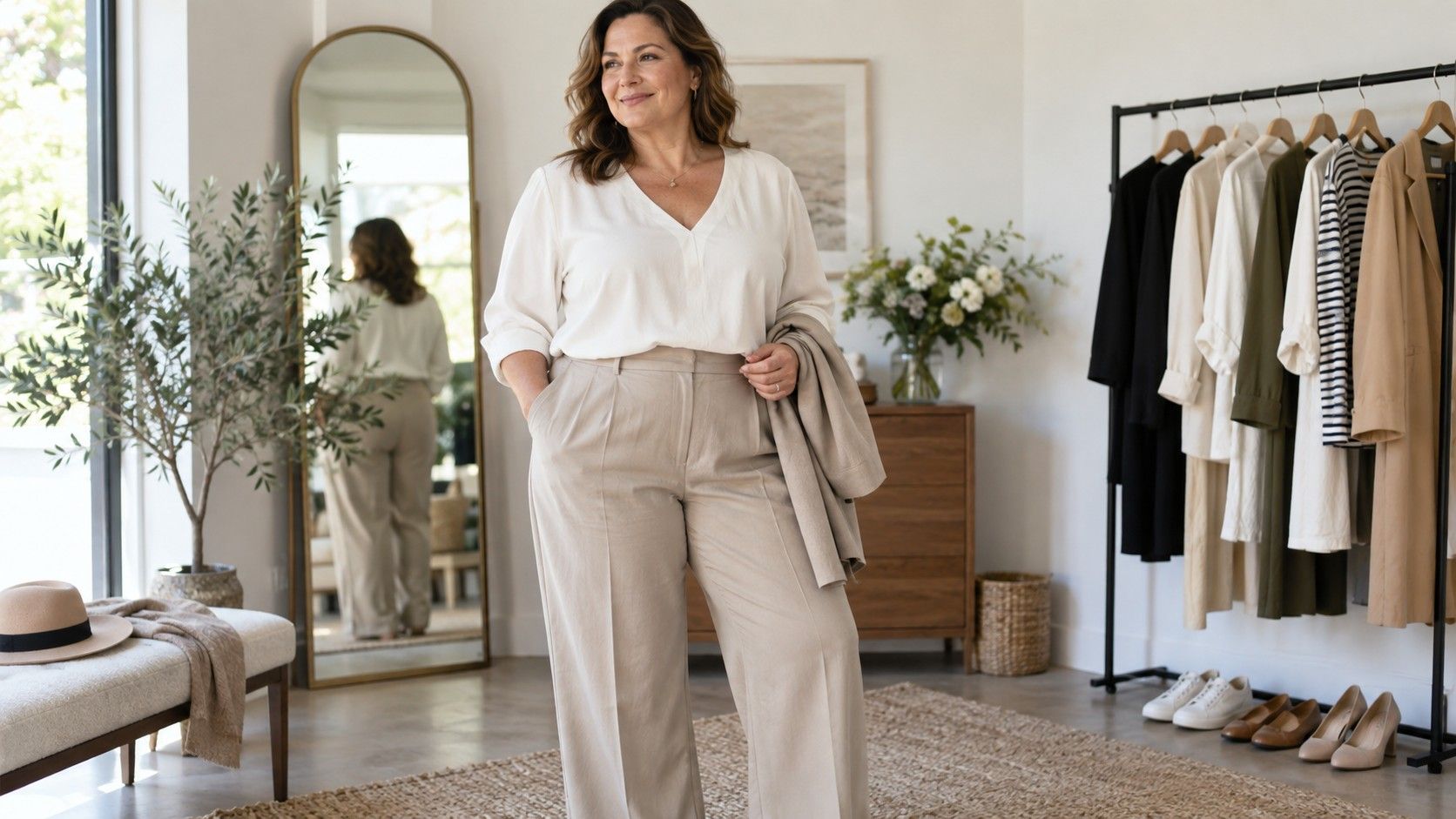
Straight trousers, gently tapered styles, wide legs, and fluid pull-on pants are all possibilities. A longer top can make a good partner for a slim trouser, but it should fall rather than cling across the midsection. With skirts, assess the waistband and fabric together. A smooth elastic waist can be comfortable, although a stiff elastic may roll; a side zip can lie flatter, although it needs enough ease through the hip. These are engineering details, but they decide whether a garment gets worn repeatedly.
Layering with clean vertical lines, if you want them
Column dressing means using a similar color or value through the center of an outfit, sometimes with an open layer over it. It can create a calm, uninterrupted line, and it is especially useful on rushed mornings because the components are easy to combine. For example, straight dark trousers and a matching tank under an open cardigan can look considered without needing a belt or a tucked shirt. The outer layer should hang freely at the front rather than pull across the back.
A blazer worn open can do the same job, provided the shoulder fits and the lapel lies flat. Check the jacket hem when your arms are down and when you sit. If it catches at the fullest part of the body and swings out, a slightly longer cut or side vents may be more comfortable. You can also skip the long layer entirely and use a strong shoe, a scarf, or a textured bag to finish the outfit. Clean lines are a choice, not a mandate to hide behind fabric.
Make outfits from trusted components, not style rules
Build a small testing routine around pieces you already wear. Perhaps one pair of trousers has a rise that never bothers you, one knit has a neckline you like, and one jacket keeps its shape all day. Add a new item to that known base rather than buying a complete apple body shape style guide outfit at once. This makes it clearer whether the new shirt, dress, or trouser is genuinely useful or merely attractive on a hanger.
Photograph an outfit after sitting and walking, not only when you first put it on. Notice where you adjust it and whether that adjustment bothers you. A good item may be close to the body or far from it; it may be bright, dark, fitted, or relaxed. The shared standard is ease at the midsection, stable shoulders, and enough room for your normal movements. Once those conditions are in place, you can choose color, shape, and detail based on pleasure rather than a promise to look smaller or more balanced.