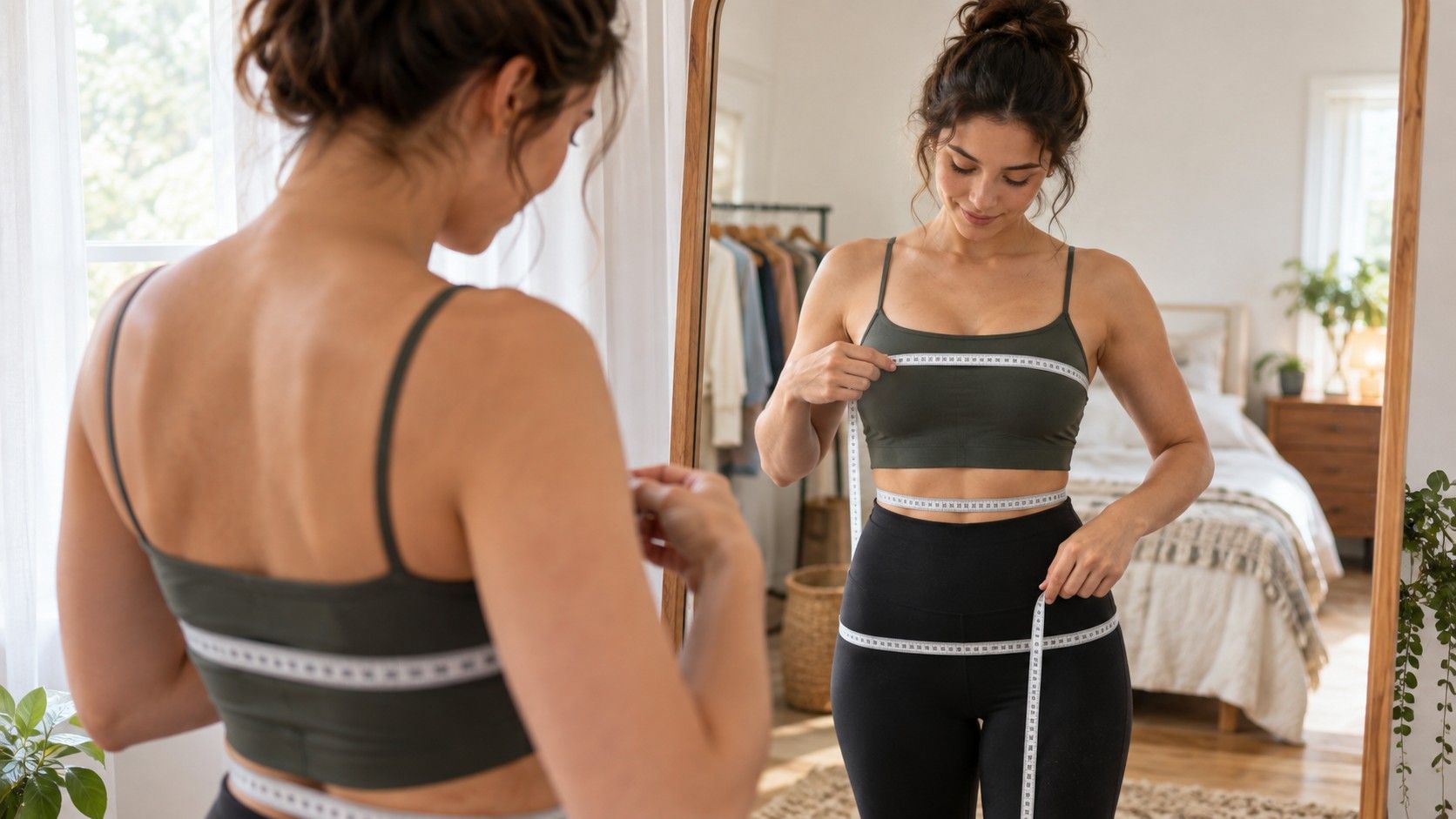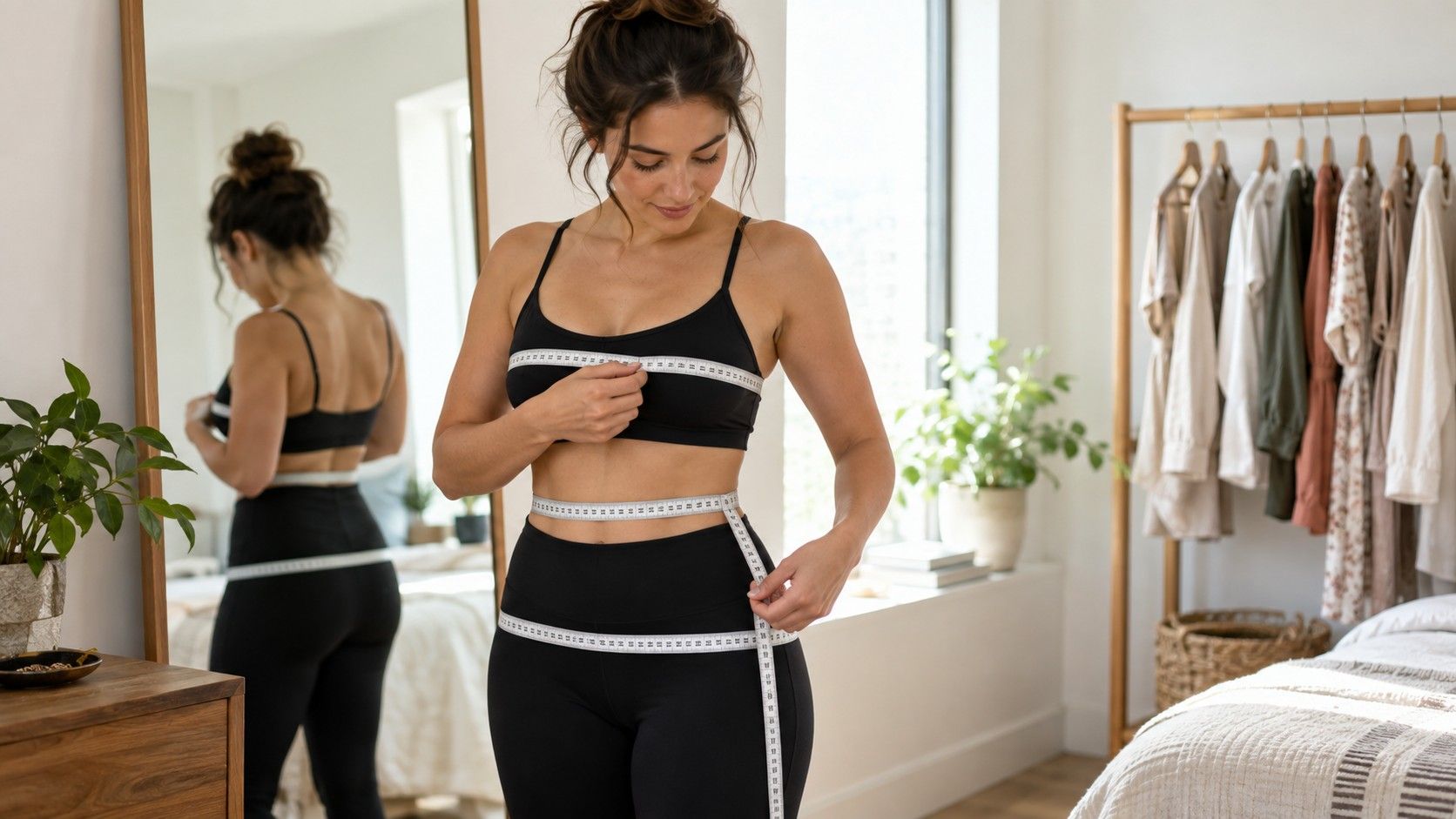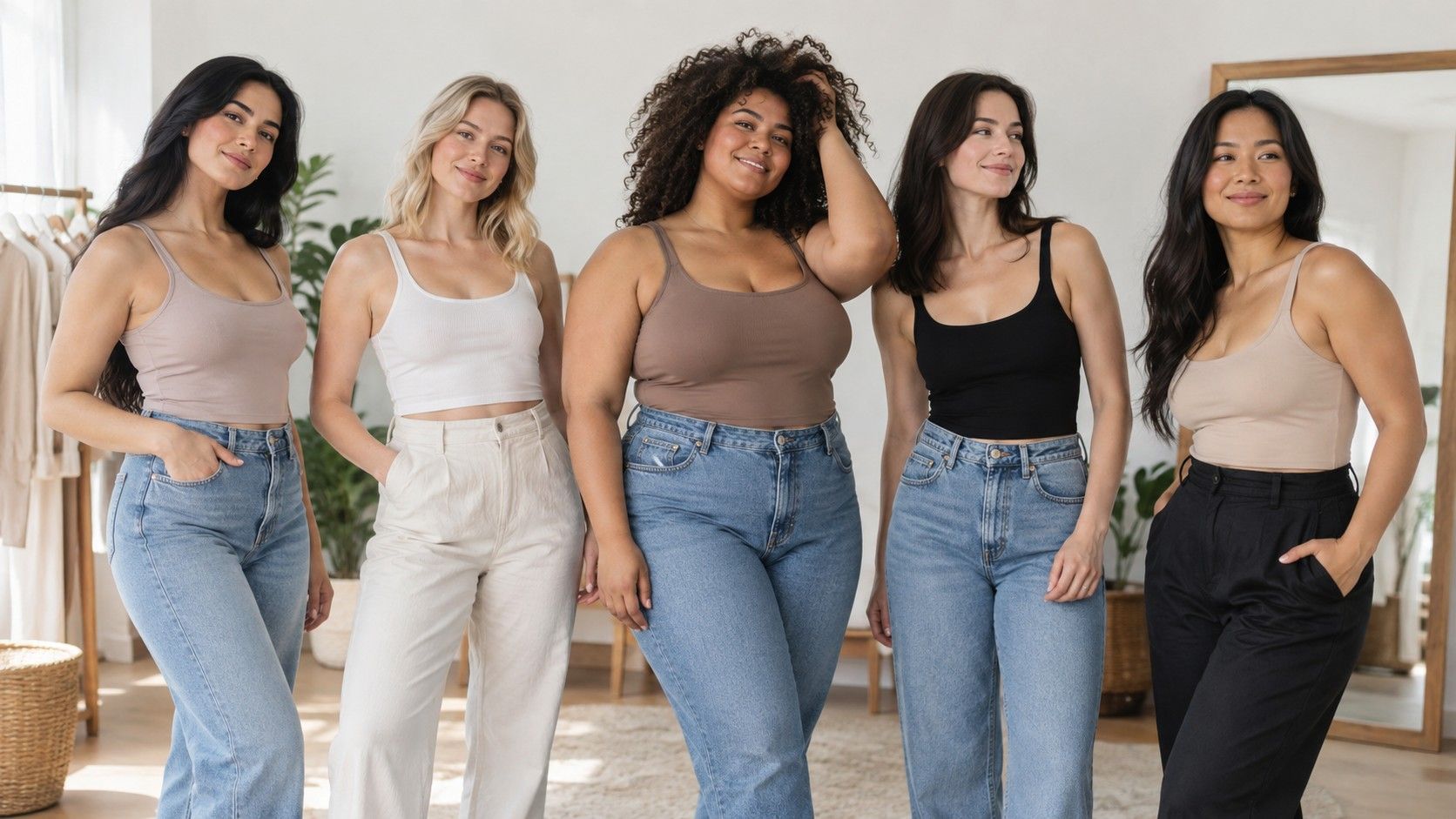
The body shape vs body type question sounds simple until you begin looking at clothing advice, fitness posts, and old-fashioned charts. The same words are used for different things, then treated as if they carry a verdict about health or personal style. They do not. A clearer vocabulary makes shopping and getting dressed less confusing: body shape is usually about visible proportions, while body type may mean several different things depending on who is speaking.
Why the terms blur together online
Fashion articles often use body shape and body type as interchangeable labels because both can refer to the outline seen in a mirror. Someone may say pear, rectangle, hourglass, apple, or inverted triangle and call each one a body type. In that context, they are usually describing the relative visual width of shoulders, waist, and hips rather than making a scientific classification.
Elsewhere, body type can mean build, frame, or a fitness category. The word somatotype, for example, appears in discussions of ectomorph, mesomorph, and endomorph. Those categories were developed in a historical framework and are not a reliable way to predict health, personality, or what your body will do. The confusion begins when a clothing label and a health claim are placed in the same sentence.
It is worth asking what the writer is actually trying to describe. If the advice is about a jacket pulling at the shoulders, the useful subject is garment fit. If it is about nutrition, training, or medical risk, a sketch of a silhouette is not enough information. The topic changes, so the evidence should change too.
What a body shape definition can usefully describe
A practical body shape definition is modest: it is a shorthand for the relationship among a few visible areas of the body, often shoulders, bust, waist, and hips. It may help you notice that trousers tend to fit one area differently from another, or that a particular dress waist seam feels better at a certain height. It cannot tell you your exact measurements, needs, or style identity.
Proportions also shift with posture, clothing, and the way you stand. A thick sweater can make the upper body look wider; a high-rise trouser can make the waist look more defined; a camera taken from below changes almost everything. That is why a single photo or online quiz should be treated as a starting observation, not a diagnosis.
If you want to explore your proportions, wear close-fitting clothes and take a relaxed front-facing look in good light. Notice shoulder width, the natural waist, and the hip line, but also note the details clothing charts leave out: torso length, rise preference, bust shape, upper-arm comfort, and whether you like ease or structure. Those details are often more useful in a changing room.
What people may mean when they say body type
When someone asks what is body type, the most honest answer is: it depends on context. In a clothing conversation, they may mean shape category. In fitness language, they may mean a casual description of build. In health care, responsible professionals use much more specific measures and individual history rather than relying on a style label.
Somatotype language deserves particular care. It can seem tidy because it puts people into three memorable boxes, but human bodies do not stay in neat boxes. Muscle mass, fat distribution, hormones, disability, age, medication, sleep, stress, and training history all affect bodies in ways a simple category cannot summarize. A label may be harmless as a loose personal metaphor, but it should not direct health decisions.
Size is separate again. Two people can wear the same clothing size and have very different shoulder-to-hip relationships. Two people who use the same shape label can wear different sizes across brands. Clothing tags are manufacturing conventions, not precise descriptions of a person.
| Term | Usually useful for | What it cannot tell you |
|---|---|---|
| Body shape | Observing visible proportions and trying clothing silhouettes | Health, personality, exact size, or a universal wardrobe |
| Body type | Needs context; may mean shape, build, or casual description | A single agreed scientific category |
| Somatotype | Historical or informal discussion of build | Medical risk, nutrition needs, or fitness potential |
| Fit notes | Choosing garments that are comfortable and functional | A label for your whole body or identity |
Keep style labels away from health categories
Body labels are especially unhelpful when they slide into health advice. A person with an apple-like outline is not automatically unhealthy; a person with a rectangle-like outline is not automatically fit. Health is not visible in a body-shape chart. If you have a health question, a qualified clinician can consider symptoms, history, tests, and goals in a way a clothing label never can.
Fitness is equally individual. Training can change strength, endurance, mobility, and sometimes visible shape, but it does not create a moral hierarchy of silhouettes. The idea that one label is better than another is a sales tactic dressed up as advice. It can turn dressing into a project of concealment instead of a practical part of daily life.
When content makes a confident promise about changing a body type, pause. Is it offering a realistic change in a skill or habit, or is it using vague language to sell a program? Clear advice names the goal, the limits, and the relevant professional support. It does not imply that a body needs to earn the right to be styled well.
Turn proportion observations into better fitting-room questions
Body type and style become useful together only when the style part stays specific. Rather than asking which outfits a label permits, ask where a garment needs room, where you prefer definition, and what you need to do while wearing it. These questions lead to decisions you can actually test.
For trousers, check the rise, seat, thigh ease, and hem with your usual shoes. For a shirt, check shoulder placement, upper-back movement, button gap, and sleeve length. For a dress, sit down, raise your arms, and notice whether the waist seam stays where you want it. A garment can suit a shape category and still fail every one of these tests.
Write down patterns after shopping. Perhaps a short jacket works better with high-rise trousers, a V-neck feels too low for commuting, or a straight midi skirt is more comfortable than one with a tight waist. These notes are personal evidence. They are far more useful than an instruction to hide, balance, lengthen, or minimize a certain part of yourself.
Choose a simpler language for personal style
Try describing clothes instead of describing your body. You might say: I like an open neckline, a defined waist, room through the hip, a long vertical line, or a soft shoulder. You might say: I avoid stiff collars, very low rises, and waistbands that roll when I sit. This language is precise, changeable, and free of judgment.
It also makes experimentation easier. A person who usually wears tailored trousers can try a full skirt because the fabric and movement appeal to them, not because a chart assigned it. Someone who loves broad-shouldered jackets can wear them even if an article says they disrupt balance. Personal style develops through repetition, comfort, and curiosity, not obedience to a diagram.
So the distinction in body shape vs body type is worth knowing, but it does not need to become another rule. Use shape as a light tool for noticing proportion. Treat body type as a context-dependent term. Then return to the questions that matter in real clothes: does it fit, can you move, and does it feel like you?