A short torso is not a problem to solve, and it is not a diagnosis hidden in a fitting-room mirror. It simply means the distance from shoulder to waist looks compact relative to the legs. That can make a very high waistband, a deep tuck, or a long jacket feel crowded even when every item fits. The useful question is less “How do I correct this?” and more “Where do I want the visual break of this outfit to sit?” A few deliberate tests make the answer clearer than a body-shape label ever will.
Notice the fit clues before changing your wardrobe
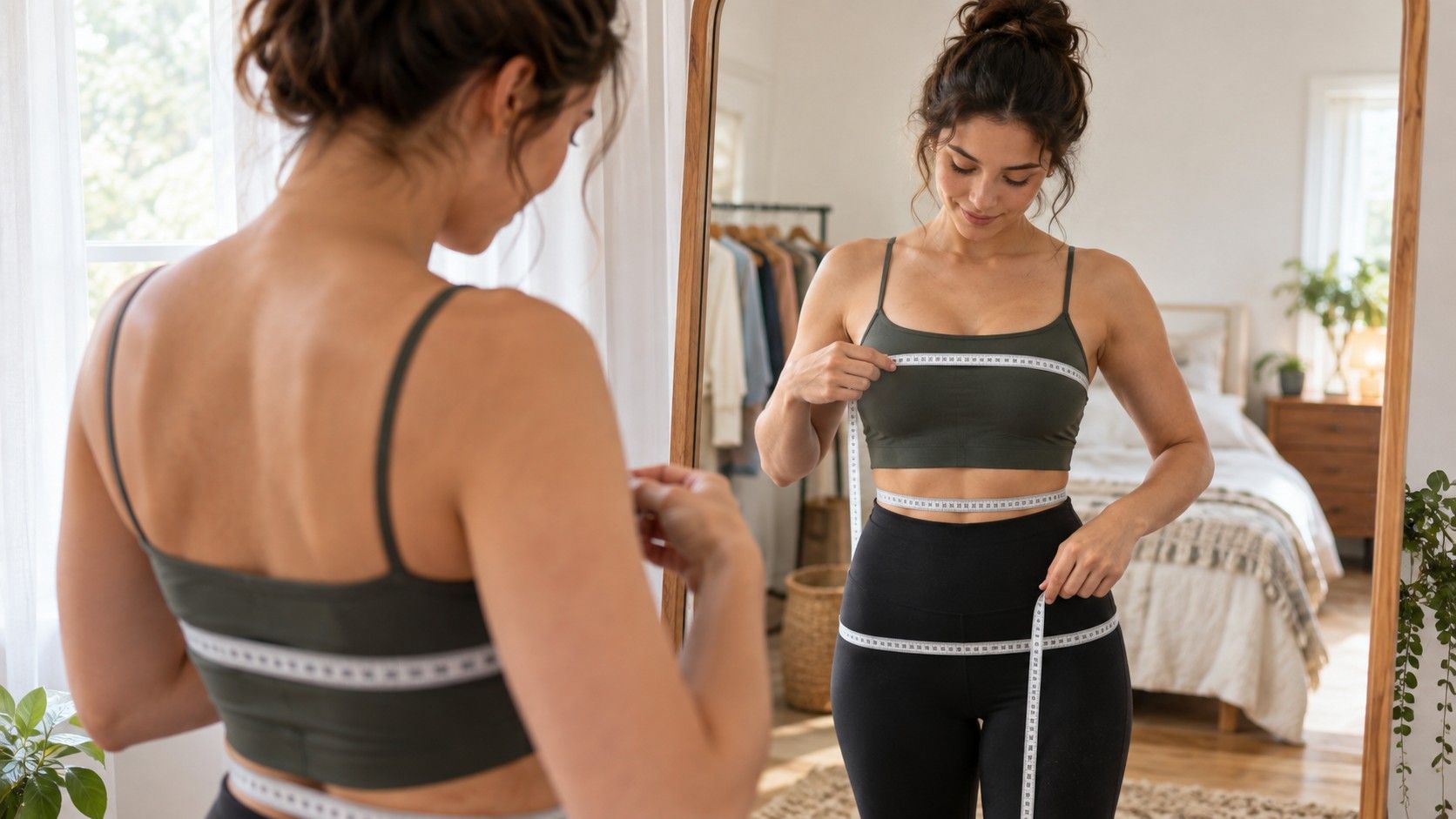
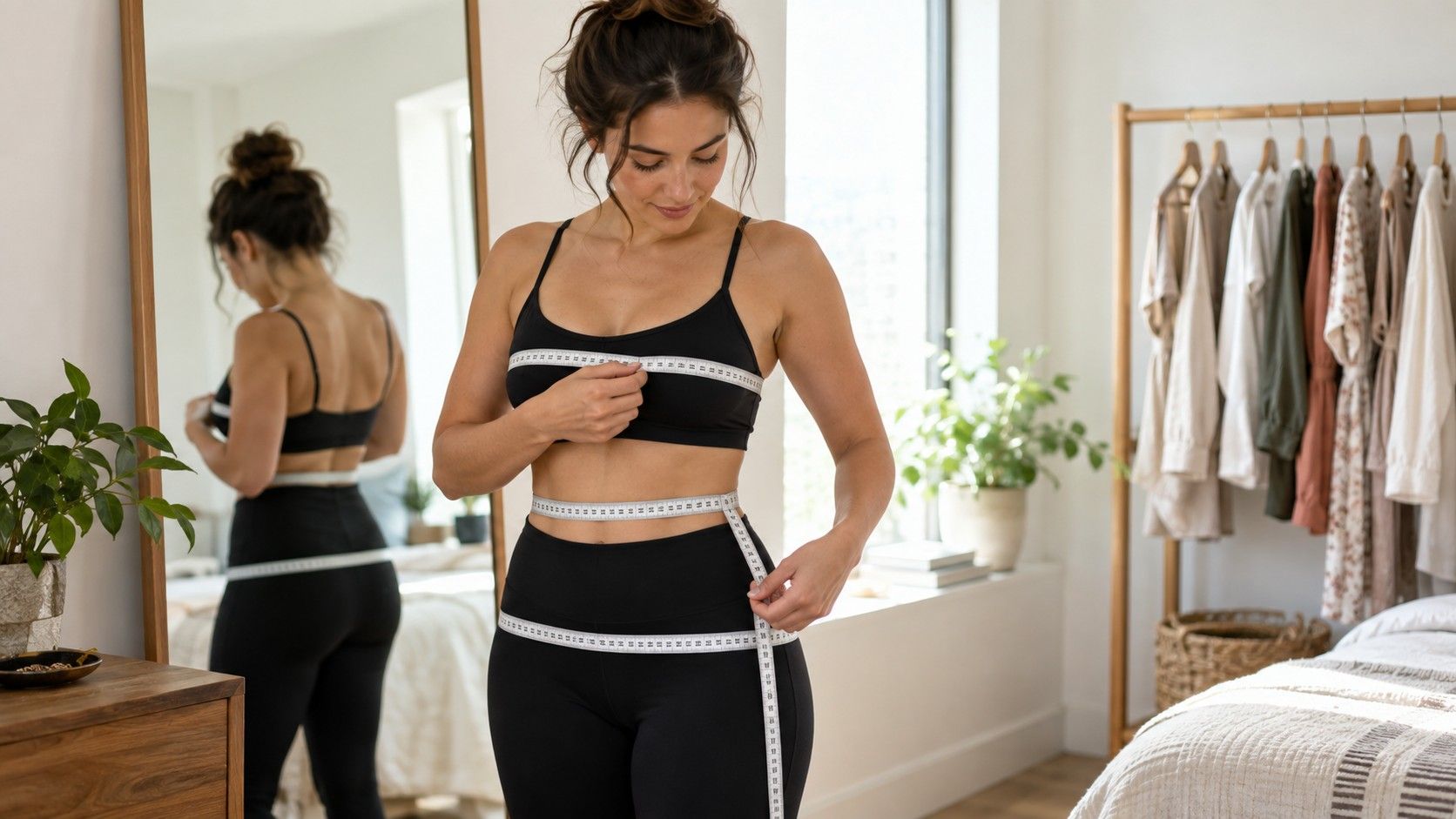
Start with clothes you already trust: a plain T-shirt, straight jeans, and a jacket that closes comfortably. Stand far enough from the mirror to see the full outfit, or prop up a phone at chest height and take a neutral photo. If the waistband seems close to the bust, if a fully tucked shirt leaves little visible space above it, or if every blazer appears to start at the hip and end at the same point, you may be responding to short torso proportions. None of these signs needs fixing; they are just useful information for choosing proportions on purpose.
Fit at the body still comes first. A waistband that digs in, a jacket that pulls across the shoulders, or a shirt that rides up will look awkward on every proportion. Check the side view as well as the front. A top can look pleasantly short from the front but climb toward the back when you sit. In a shop, lift your arms, sit on the bench, and look at the waist seam after a minute. Those small movements reveal more than a dramatic pose under harsh changing-room lights.
Use rise and hem placement as adjustable lines
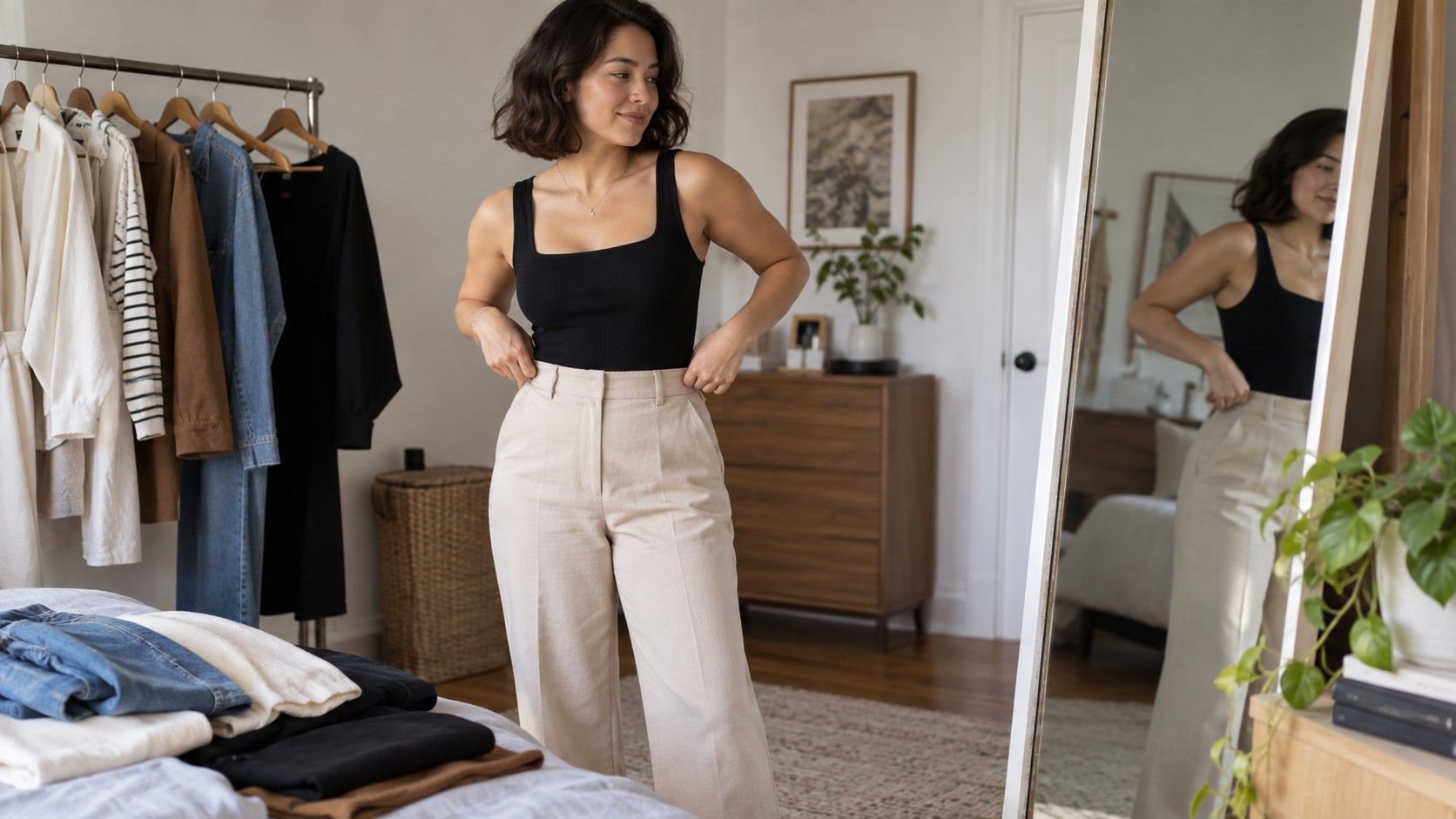
Rise is the distance between the crotch seam and the top of the waistband, but its visual effect depends on where it lands on your own body. A high rise can feel secure and can lengthen the apparent leg line, yet it may also push the waist break very close to the ribcage. Mid-rise trousers often give a short waist more breathing room because the horizontal line sits a little lower. Try the same top with two rises before deciding that either category is “for” or “against” you. The comparison is much more useful than a rule printed on a label.
Hems work with that line. An untucked knit that ends around the high hip can create a gentle vertical column without swallowing the waist. A full front tuck creates a sharp break; a half tuck or a small French tuck leaves more flexibility. With a button shirt, unbuttoning the lower button or wearing it open over a fitted tank changes the line without requiring a special purchase. Look for a result that feels like clothing resting on you, not like a geometry exercise that has to be maintained all day.
| Detail to test | What it can change | Practical check |
|---|---|---|
| Mid-rise waistband | Leaves more visible space between bust and waist | Sit down and make sure it does not slide or gap |
| Soft partial tuck | Adds shape without a hard horizontal division | Photograph it after walking for a minute |
| Top ending at high hip | Keeps the leg line readable while avoiding a tiny waist panel | Raise both arms to see whether it becomes too short |
| Open vertical layer | Creates length through the center of the outfit | Check that the shoulders and sleeve length still fit |
Build outfits around a calm center line
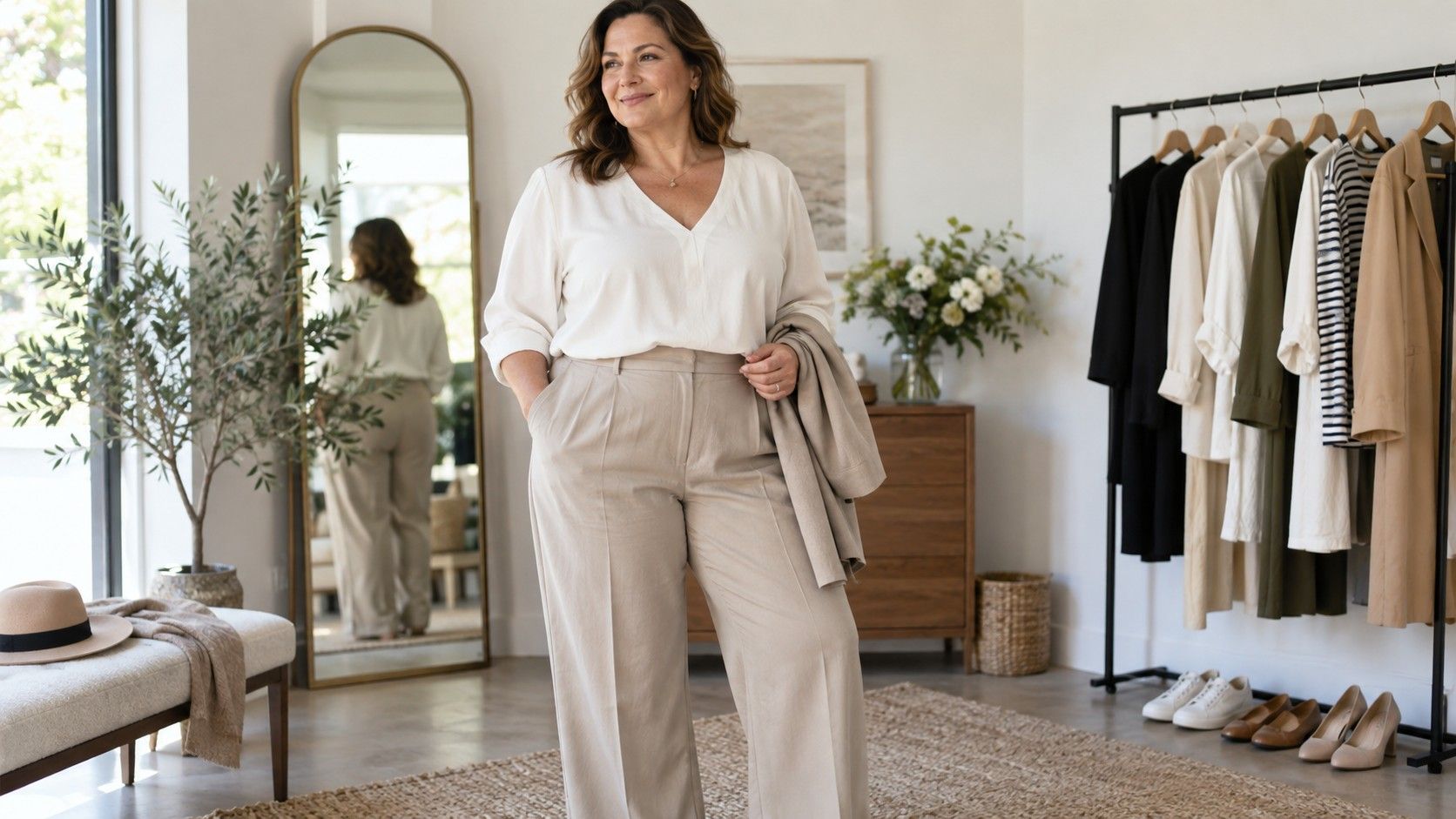
For everyday short torso outfit ideas, think in columns rather than tricks. A close-fitting tank with mid-rise straight trousers and an unbuttoned overshirt creates a visible vertical center line. The overshirt need not be long; one that ends near the high hip can work well if it hangs cleanly. A monochrome or low-contrast combination makes the effect quieter, while a brighter layer or a printed trouser makes the waist break more obvious. Neither is wrong. The point is to choose the level of contrast rather than accidentally stacking several strong horizontal lines.
Dresses make the same question easier to see. An empire seam sits high and can feel constricting if you already perceive your upper body as compact. A dropped waist can feel loose but may erase shape entirely. A softly defined natural or slightly lowered waist is often worth trying, especially in fabrics that skim rather than cling. Check where the seam lands when you are relaxed, not when you stand unusually straight. A dress that looks perfect in one still image but shifts upward while you walk rarely becomes a favorite.
Choose layers and necklines for the situation, not a rulebook
Jacket length changes the rhythm of the outfit. A very cropped jacket can be appealing when you want a short, graphic silhouette, but it may stack a second line close to the waistband. A jacket ending around the upper hip often gives the eye a little more distance to travel. Longline layers can also work, especially when worn open, although a heavy oversized coat may make the whole outfit feel borrowed rather than intentional. In a fitting room, close the jacket once, then wear it open; the two views can feel surprisingly different.
Necklines are another quiet lever. A V, open collar, scoop, or a simple unbuttoned shirt front introduces vertical space above the waistline. That does not mean crew necks are banned. A crew-neck T-shirt with no necklace, no belt, and a relaxed untucked hem can look wonderfully clean. What matters is the total number of stopping points: neckline, collar, belt, waistband, jacket hem, and shoe. When an outfit feels busy, removing one of those interruptions often helps more than replacing everything.
Keep the silhouette you genuinely like
Some people with a short torso love a high-rise skirt and a crisp full tuck because they enjoy the compact, waist-defined shape. Keep it. Proportion advice becomes unhelpful when it treats every visual preference as an error. If you want that look to feel easier, choose a top with a little length and loosen the tuck at the sides, or let the belt match the skirt so it does not create an extra stripe. A high waist can be a style choice, not a mandatory strategy for longer-looking legs.
The best test is repeat wear. Make three versions of an outfit: one with a full tuck and high rise, one with mid-rise and a partial tuck, and one with an untucked top and open layer. Wear each around the house, sit at a desk, and take a quick photo in ordinary daylight. Notice which version needs the least adjusting and still feels like you. That is the practical answer to how to dress a short torso: use proportion tools when they serve comfort and expression, then leave the rest alone.