Rectangle body shape outfits are often presented as a set of rules for creating curves, but that is much too narrow to be useful. A straighter relationship between shoulders, waist, and hips can support sharp minimal tailoring, soft layered looks, bold waist definition, or none at all. The practical question is not how to correct a body; it is how a garment sits, moves, and makes you feel on an ordinary day.
Start with the proportion pattern, not a verdict
The rectangle label usually describes a silhouette in which the shoulder and hip widths look fairly similar and the waist has a subtler inward curve. It does not describe size, height, muscle, age, or a fixed set of measurements. Two people can both use the label and need entirely different jeans because one has a long rise and the other has a short torso.
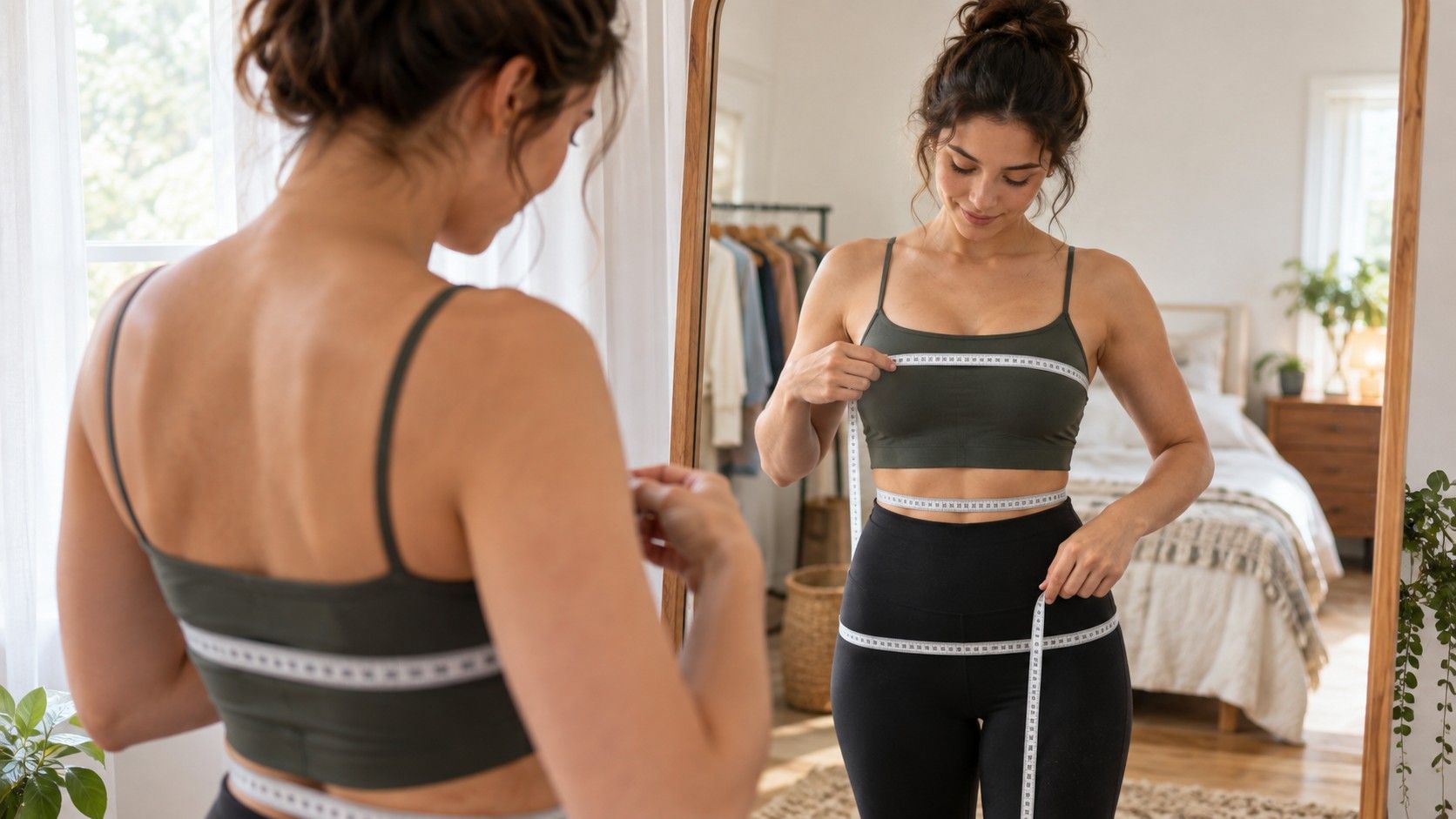
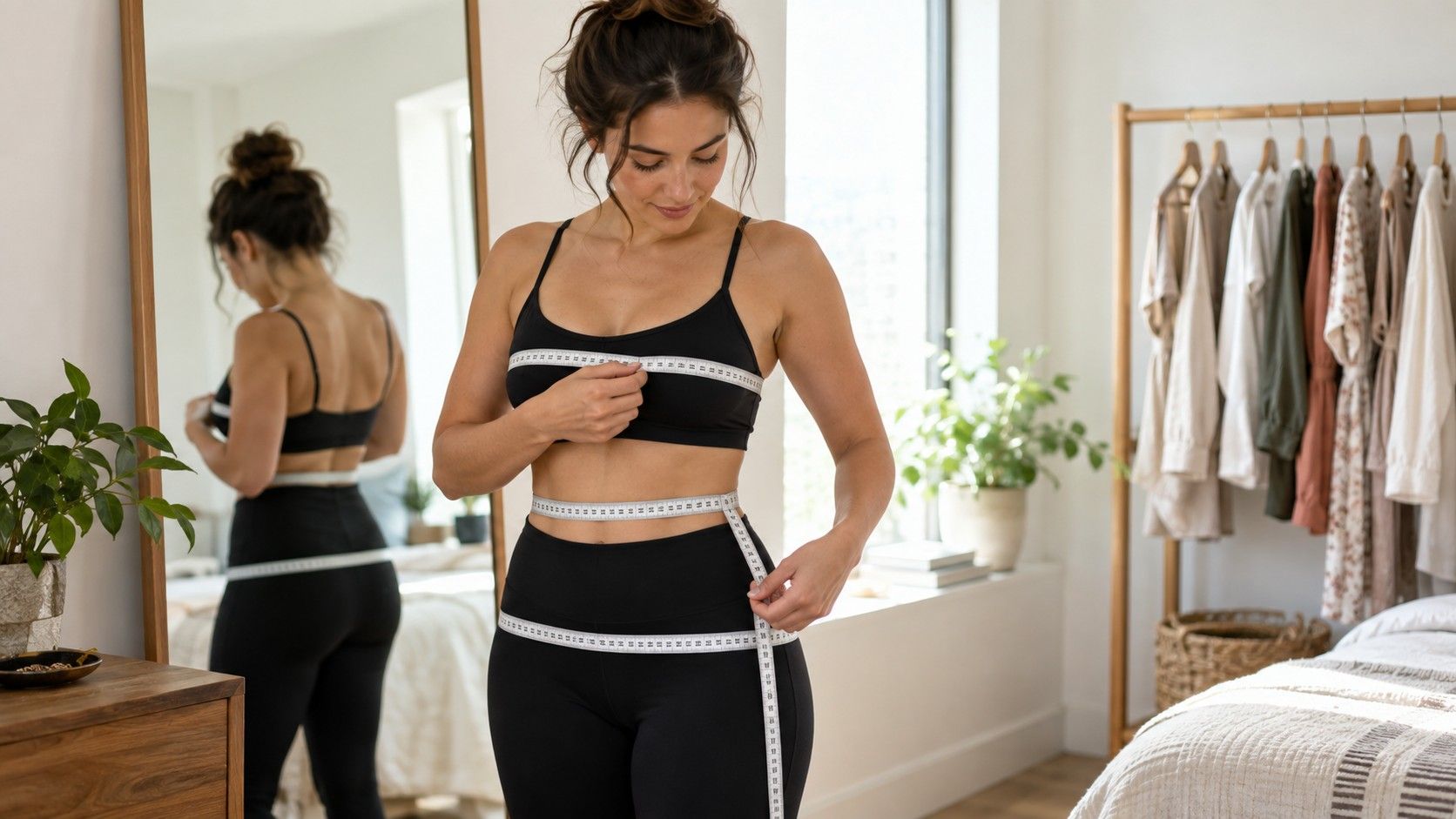
A mirror check is more helpful than an online calculator. Put on a close-fitting top and straight-leg trousers, then look at the shoulder line, the natural waist, and where the hip is widest. Notice where fabric pulls or disappears. That small exercise gives better information for clothes for a rectangle body shape than trying to force yourself into a diagram.
It also helps to separate shape from mood. Some mornings a clean vertical line feels calm and intentional; on another day you may want a gathered skirt or a big cardigan. Both choices can work with a straight torso. The label is a vocabulary for observing proportion, not a uniform.
Use seams and fabric when you want a changed outline
Construction does much of the visual work. A waist seam placed at your natural waist can make a dress feel anchored, while a dropped waist creates a longer, looser line. Neither is automatically better. Try both with the same shoes before deciding: the hem, the rise of the skirt, and the weight of the fabric can change the result more than the seam itself.
For people who want more waist emphasis, wrap tops, tie-front shirts, princess seams, and softly belted shirt dresses are useful experiments. The belt should sit where it can stay put. A belt that climbs upward all afternoon is not a styling solution; it is a fit problem. Wider belts often read as graphic and structured, while a narrow tie can make a softer interruption.
Fabric matters just as much. Crisp poplin and denim hold a deliberate shape around the torso. Rib knit follows the body but can reveal every twist of a waistband. A fluid viscose blouse paired with trousers that have a firm waistband often gives a balanced mix: movement above, definition below. In a fitting room, lift your arms and sit down before trusting a still mirror image.
Build volume where it suits the outfit, not where a rule says it belongs
Volume placement is a useful idea because it gives you choices. A puff sleeve, a full skirt, pleated trousers, a textured knit, or a cropped jacket each changes the outline in a different place. You do not need all of them at once. When top and bottom are both oversized, a visible ankle, a tucked edge, or a shorter jacket can keep the outfit from feeling accidental.
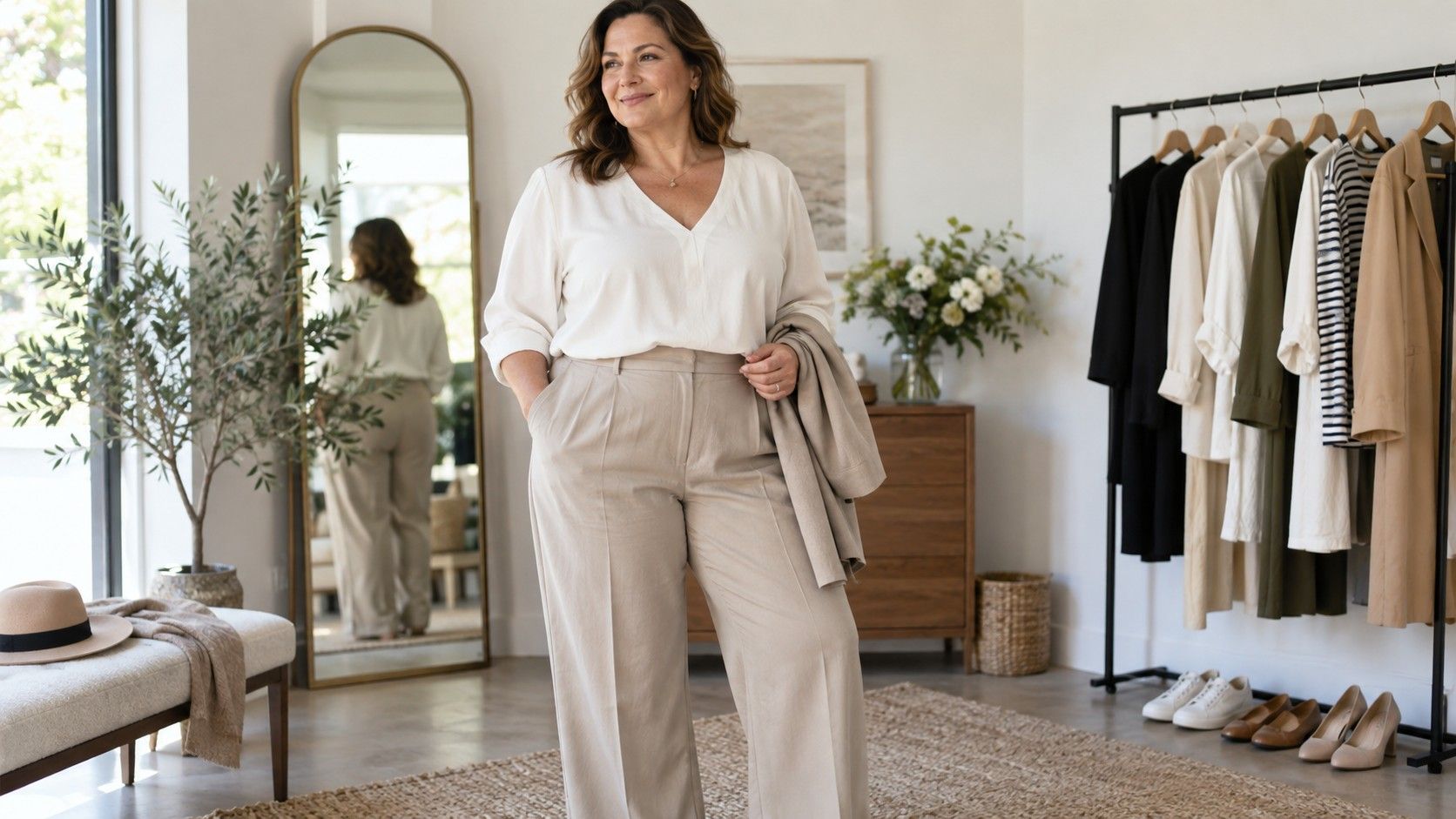
For a weekday outfit, try a tucked fine-gauge sweater with high-rise wide-leg trousers and a belt only if it is comfortable. The trouser shape adds room through the lower half; the tuck keeps the torso visible. For a casual version, a boxy cropped denim jacket over a fitted tank and a column skirt creates contrast without asking the waist to do all the work.
Skirts offer another simple test. An A-line skirt makes space from the waist down, a bias skirt follows the body more quietly, and a straight midi makes a long vertical line. Walk to the end of the room in each. If you keep tugging at the waistband or worrying about the slit, the silhouette is not earning its place in your wardrobe.
| Piece | What to check | What it can change |
|---|---|---|
| Cropped jacket | Hem should finish at a point you like on the torso | Breaks a long straight line and highlights the waist area |
| Wide-leg trousers | Rise, seat comfort, and trouser length with your real shoes | Adds lower-body movement and a grounded outline |
| Wrap top | Neckline coverage and whether the tie stays secure | Creates adjustable waist definition and diagonal interest |
| Column dress | Shoulder fit and ease through the hips when walking | Preserves a clean vertical line with little visual fuss |
Choose work clothes that survive the actual workday
A lot of rectangle body shape style advice stops at a polished photo. Office clothes need to work while reaching for a laptop, taking public transport, and sitting through a long meeting. Start with the shoulder seam in jackets and shirts. If it lands too far out, the garment can look borrowed even when the waist is neatly tailored.
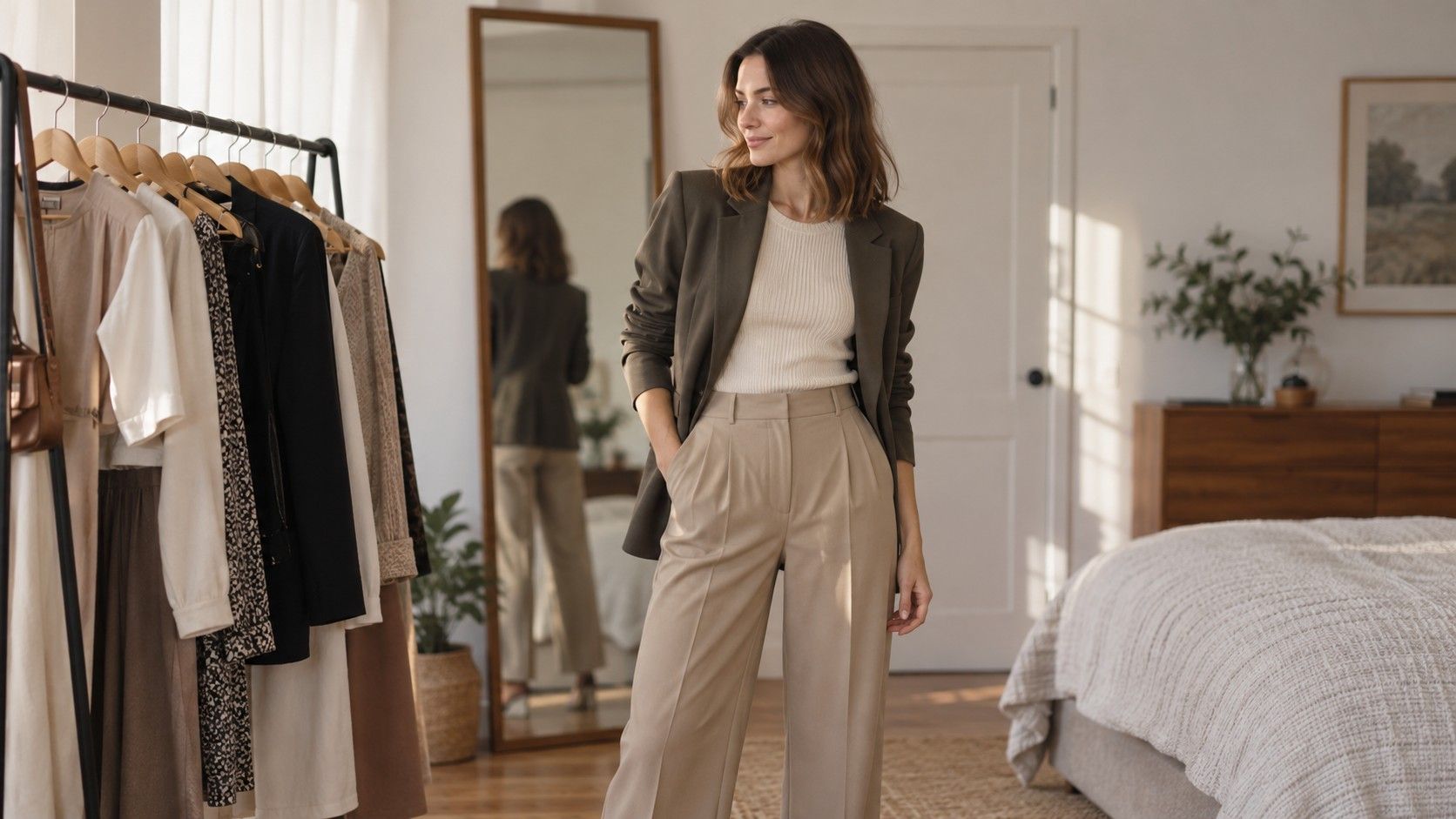
A single-breasted blazer with a light waist shape is an easy base, especially over a fine knit and straight trousers. If you prefer a stronger shoulder, balance it with a trouser that has some width or a skirt with a little flare. This is not a law of visual balance; it is a practical way to avoid feeling top-heavy in a jacket you otherwise love.
Dresses can be the least complicated route. A sheath with darts, a knit midi with a side tie, or a shirt dress with a removable belt gives different levels of definition. Keep the belt removable when possible. A dress that looks right only when cinched tightly may not be the dress you reach for after lunch.
Weekend formulas can be simpler than styling advice suggests
For weekends, straight body shape clothes can lean into ease. A fitted tee with relaxed jeans and an open overshirt has a readable shape without any elaborate trick. A half tuck can show the waistband while leaving room for movement. If the shirt is stiff, roll the sleeves; if it is soft, let it hang and use a shorter layer over it.
Try a small outfit rotation rather than buying a special category of clothing. One pair of mid- or high-rise jeans, a straight skirt, a cropped jacket, a long cardigan, a close-fitting tank, and a loose button-down can create very different proportions. Photograph the combinations in daylight. The photo is not a judgment; it helps you remember which hem lengths and rises felt natural.
Colour can provide structure too. A tonal outfit makes a continuous vertical line, while a contrasting top and bottom marks a break at the waist or hip. Neither needs to be slimming or balancing. Think of contrast as punctuation: a bright knit, patterned trouser, or dark belt tells the eye where to pause.
Let fit notes outrank the body-shape label
The most useful rectangle body shape outfits usually come from a short personal list of fit notes. You may learn that crew necks feel better with an open layer, that high-rise trousers need a soft waistband, or that fitted sleeves make an oversized shirt feel more like you. Those observations travel with you from one shop to another; a generic rule rarely does.
Keep an eye on proportions as your wardrobe changes. A favorite cropped jacket may work differently with low-rise jeans than with a high-waist skirt. Shoes matter too: a substantial boot can support a longer, wider trouser, while a delicate flat may make you prefer a cleaner hem. These are adjustments, not corrections.
There is no prize for looking more curvy, more straight, more balanced, or more anything. The worthwhile test is pleasantly ordinary: can you sit, move, and forget about the outfit for a few hours? When the answer is yes, the clothes are doing their job.