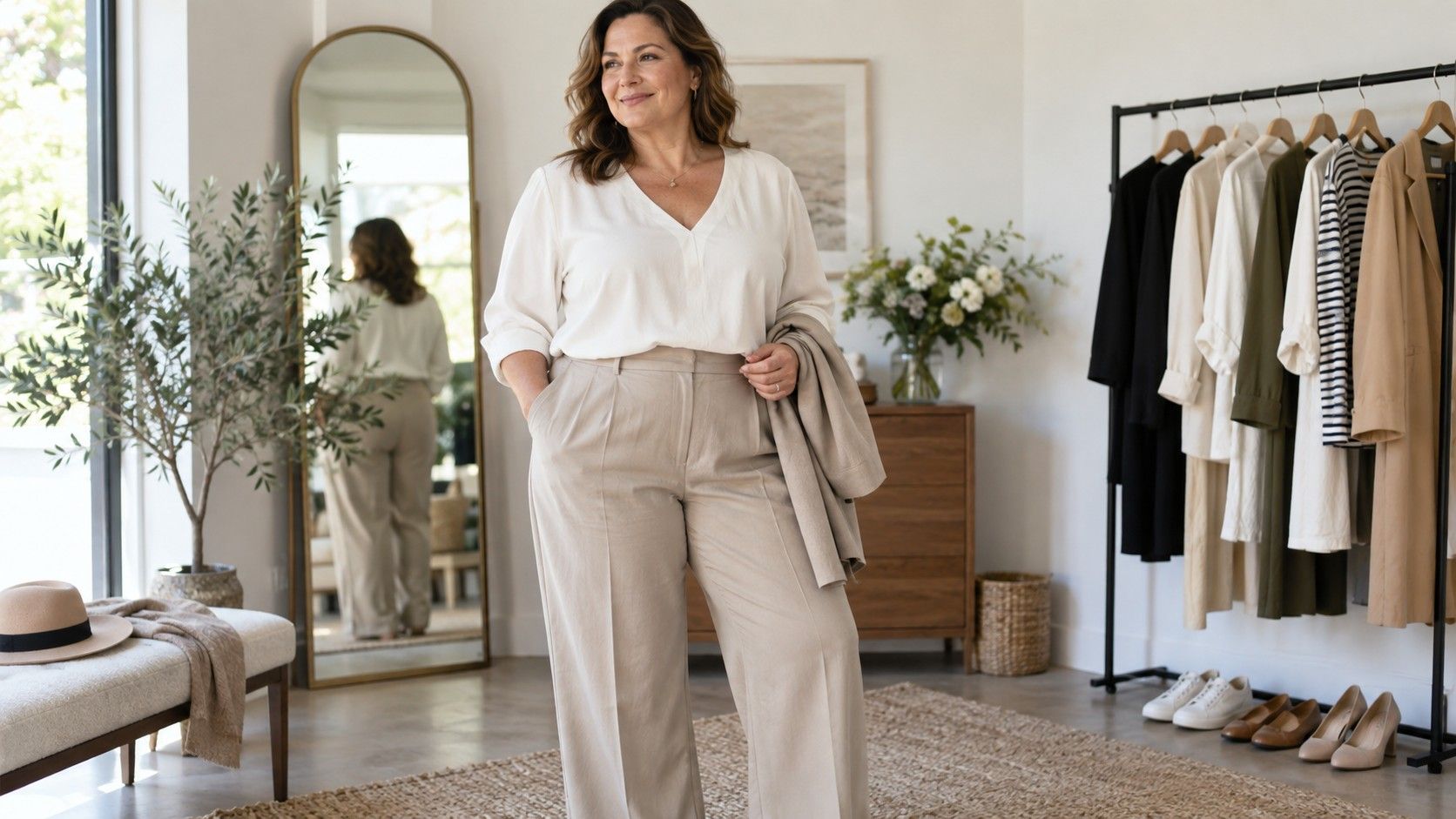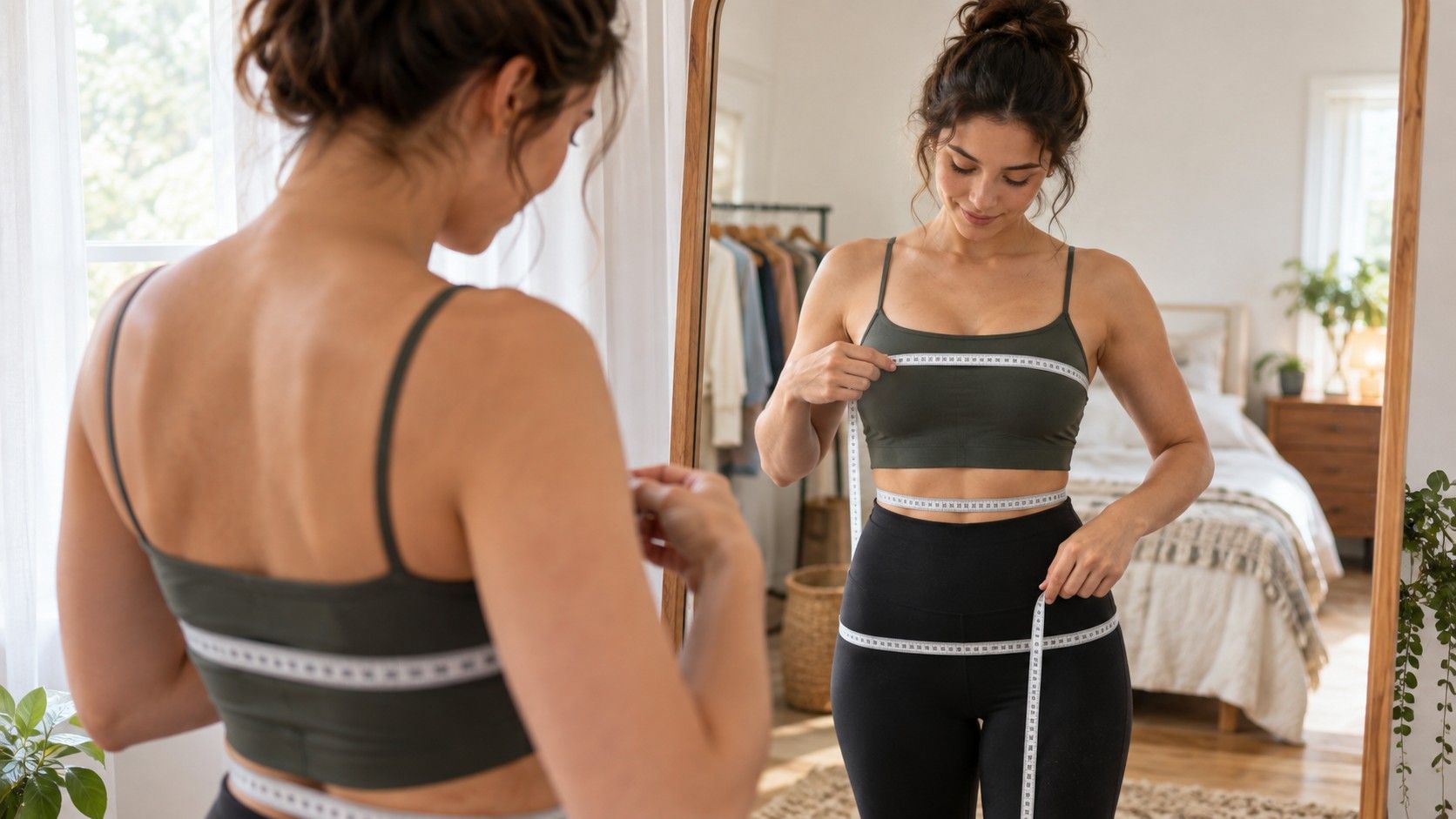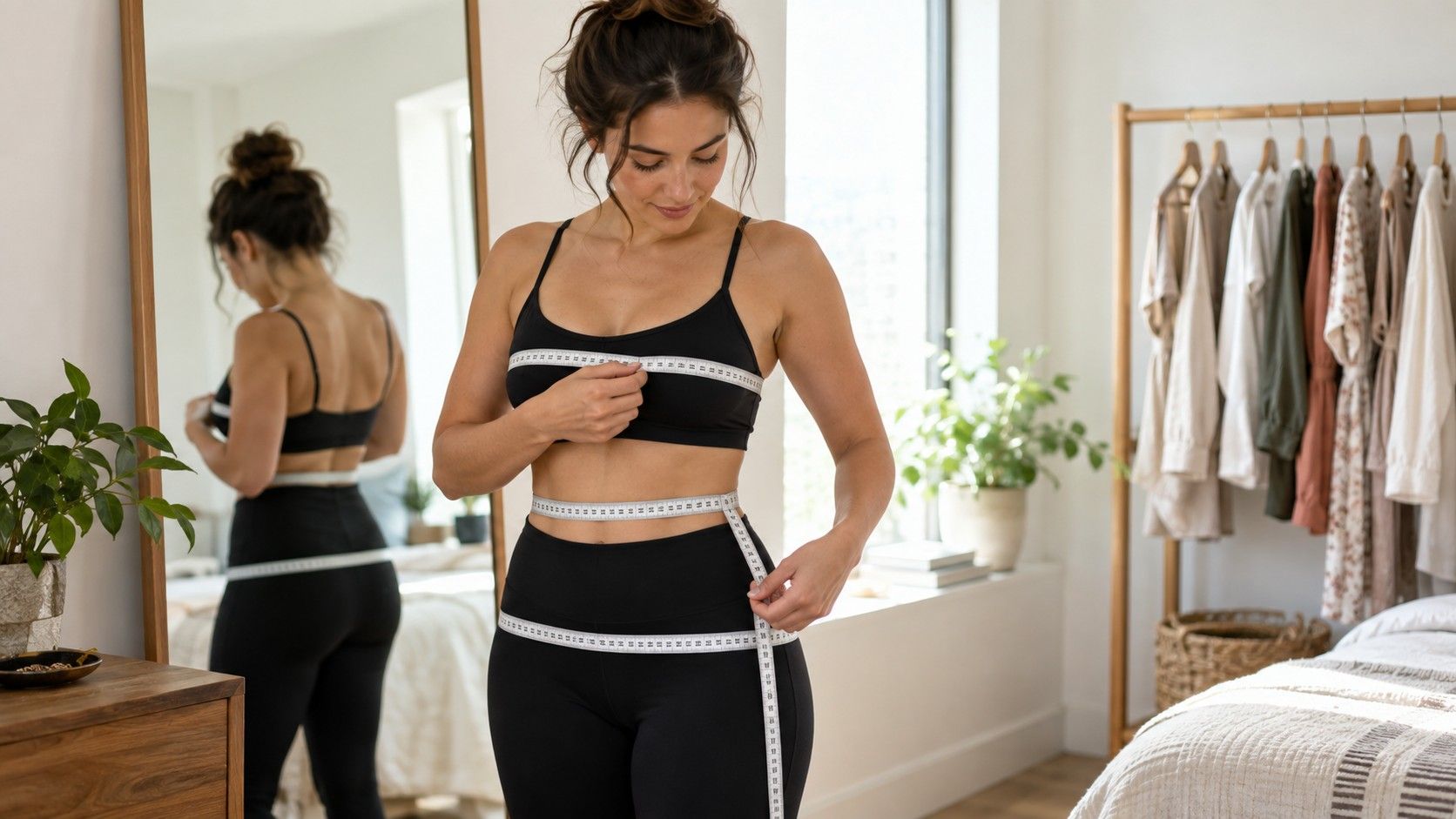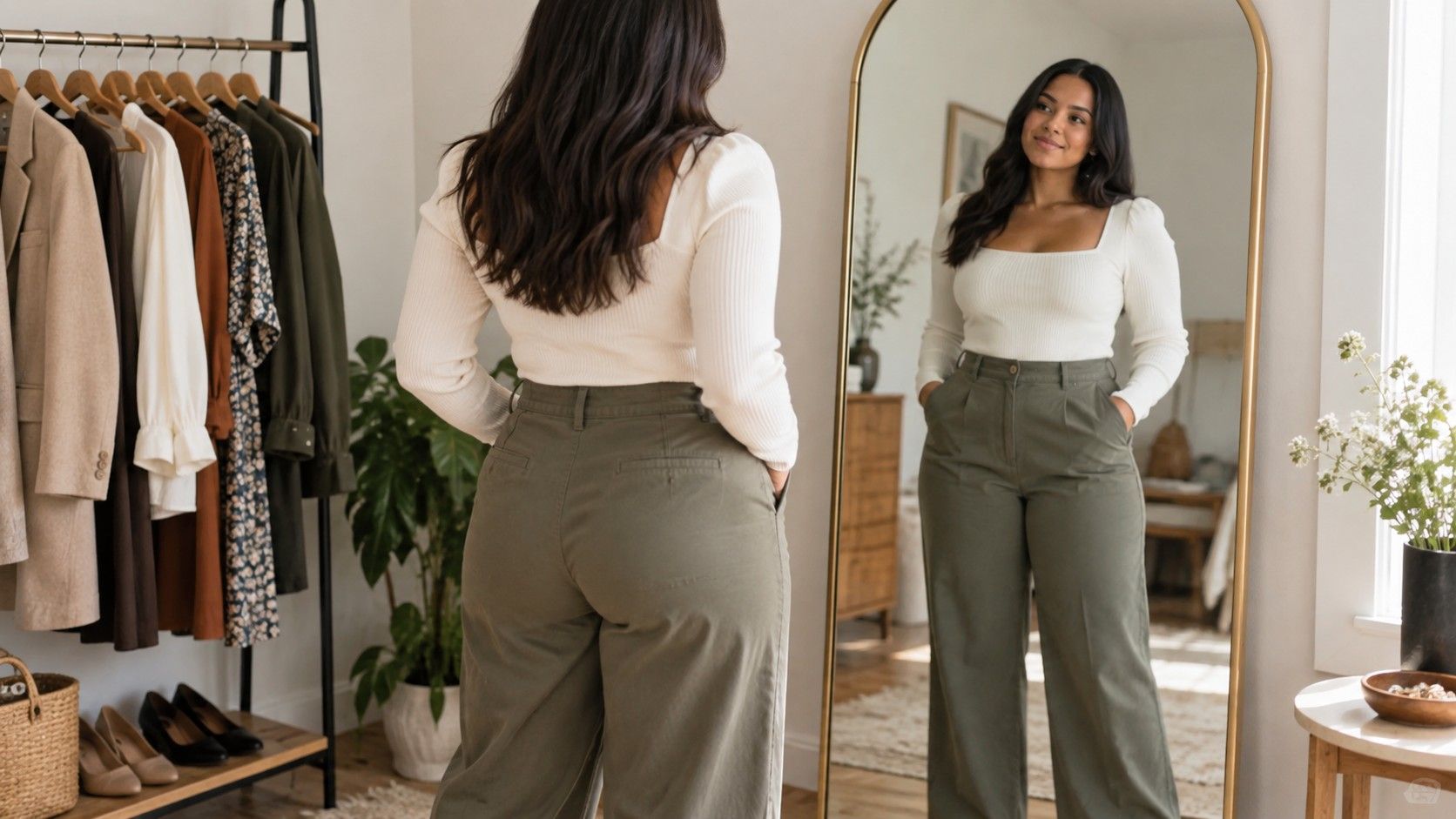
Pear body shape style is usually introduced with a quick instruction to balance the shoulders and hide the hips. That advice is too blunt to be useful for a real wardrobe. A pear-shaped outline often means the lower body carries more visual width than the shoulders, with a defined waist in between. The practical task is not to correct that proportion. It is to find clothes that give the hip area enough room, sit properly at the shoulder, and let you decide how much contrast or emphasis you actually enjoy.
What the pear label can tell you, and what it cannot
Pear proportions are a visual pattern rather than a verdict from a measuring tape. You may notice that trousers fit at the hips but gap at the waist, or that a jacket that feels fine at the shoulders stops neatly before the widest part of the hip. Someone else may have the same general outline with a longer torso, fuller thighs, narrow shoulders, or a larger bust. Those differences change which clothes feel easy, so a label should start a conversation with fit rather than finish it.
Look at where garments resist you. A skirt that rides up when walking, a trouser pocket that opens, and a jacket hem that kicks out are all concrete signals. They say more than an online chart promising the one best shape for everyone. Clothes for pear body shape work well when their cut leaves space at the lower body without making the top half feel costume-like or overly engineered.
Start with the area that needs ease, not a balancing trick
When trousers are the hard item, begin there. Choose the size that sits comfortably across the hip and upper thigh, then assess the waist separately. A small back-waist alteration is common and can turn a nearly-right pair into a dependable one. Buying the smaller size because the waist looks tidy often creates pulling at the pockets and a rise that becomes uncomfortable while sitting. That tension is not a flattering line; it is simply a fit problem.
Fabric makes a quiet but important difference. A rigid denim can feel secure, yet may need more room in the hip than stretch denim. A wide-leg trouser in fluid wool blend or tencel can fall away from the body while still looking structured. Check the rise by sitting on the fitting-room bench for a minute. If the waistband cuts in at the front or the back dips when you bend, try a different rise before assuming the leg shape is at fault.
| Everyday piece | What to check first | Why it matters |
|---|---|---|
| Wide-leg trouser | Hip ease and a waistband that stays level when seated. | The leg can skim cleanly only when the top block is comfortable. |
| A-line skirt | Whether it begins to flare below the waist rather than across the hip. | A gradual flare avoids bunching and gives walking room. |
| Structured shirt | Shoulder seam, armhole, and button placement over the bust. | A well-fitting top provides definition without needing a dramatic neckline. |
| Hip-length jacket | Hem position when the jacket is worn open and closed. | A hem that catches at the widest point can flip or pull. |
Choose top-half structure in ways that still feel like you
Pear shape outfit ideas often recommend volume, bright color, or ornament above the waist. All can work, but none is compulsory. A crisp shirt with a shoulder seam in the right place, a boat neck, a square neck, or a softly gathered sleeve can add visual presence without looking busy. The better question is whether the neckline and shoulder treatment feel proportionate to your face and comfort level. A puff sleeve that makes you feel theatrical will stay unworn no matter how well it follows a style chart.
Pay attention to length. A top ending at the narrowest part of the waist may make a clean break with high-rise trousers or a skirt. A longer shirt can also work if it has side slits and enough fabric to fall over the hip rather than cling to it. When trying a half-tuck, lift both arms and then relax them. If the shirt immediately pulls out or creates a bulky knot at the front, a lighter fabric or a full tuck may be easier for an ordinary day.
Skirts and dresses are about construction, not concealment
An A-line skirt is a familiar recommendation because it can follow the waist and release over the hips without strain. But there are many versions: a stiff circle skirt, a soft bias midi, a panelled denim skirt, or a simple woven style with front pleats. The useful one is the version that remains smooth when you walk. If the waistband twists or the skirt catches at the back, it may need a different size or a less clingy lining.
Dresses simplify the question because the top and bottom are designed as one line. Fit-and-flare shapes, shirt dresses with a real waist seam, and gently draped wrap styles are often easy starting points. Test the bodice and skirt independently: does the shoulder stay in place when you reach, and does the skirt have enough stride? A dress can be visually balanced and still be wrong if its waist seam sits too high or its armholes cut in. Comfort is not separate from style; it is what makes a silhouette readable rather than tense.
Use jackets and layers to test hem placement
A jacket can be the piece that makes an outfit feel finished, especially when the trousers or skirt are simple. For pear body shape style, the key is to try it in motion. A cropped jacket may end above the hip and keep the waist visible; a longer blazer may create a relaxed vertical line. Both are valid. The awkward length is usually the one that stops exactly where the fabric must curve most sharply, then lifts away from the body every time you walk.
Wear the jacket open, closed, and with your hands in the pockets. The shoulder seam should stay near the shoulder point, while the lapels should lie flat rather than pull toward the bust. If a blazer fits through the shoulders but will not close at the hip, wearing it open is a legitimate styling choice, not a failure. If you want it to close, look for a straighter cut or a slightly longer hem rather than forcing the buttons.
Color and contrast are options, not correction tools
Dark trousers with a lighter top are often presented as the default pear body shape guide. Contrast can be attractive, but it is not a duty. A monochrome column can feel calm and modern, while a patterned trouser with a plain knit can be just as balanced if the cuts fit well. Instead of using color to erase a part of your body, use it to direct attention where you want it: a favorite neckline, a textured jacket, excellent shoes, or a bag you use every day.
Try one variable at a time. If you are curious about a broader shoulder line, pair a structured shirt with your familiar jeans. If you want a printed skirt, keep the top in a shape you already trust. This small experiment protects against the common shopping mistake of buying an entire look that only works under store lighting. A wardrobe becomes more flexible when new pieces can attach to reliable ones.
A fitting-room checklist for the clothes you will actually wear
Before buying, sit, walk, bend, reach, and look at the back view. Check whether trouser pockets stay flat, whether a skirt allows a normal stride, and whether the jacket hem returns to place after you move. Bring the shoes and underwear you use most, because a heel height or a different bra can change the balance of a hem and neckline. A phone photo can also reveal a side seam pulling forward long before you notice it in a mirror.
The strongest pear shape outfit ideas are the ones that leave you with choices. You can emphasize the shoulder, keep the whole outfit quiet, wear a fitted waist, or choose an easy straight line. Preserve the useful evidence: room where you need it, stable seams, a rise you can sit in, and layers that do not fight the hip. Once those checks are met, the body-shape label has done its modest job. The rest is personal style, which deserves more freedom than a rulebook can offer.