A longer torso can make familiar clothes behave in unexpected ways: a standard cardigan looks abbreviated, a low-rise jean seems to lengthen the middle of the body, and a tucked shirt may feel more natural than it does on a friend. These are observations, not shortcomings. Long torso styling is really about deciding where you enjoy seeing your waistline and how much contrast you want above and below it. A comfortable outfit can be balanced, elongated, or deliberately relaxed; the useful part is knowing how each choice is made.
Confirm the proportion through clothes that already fit
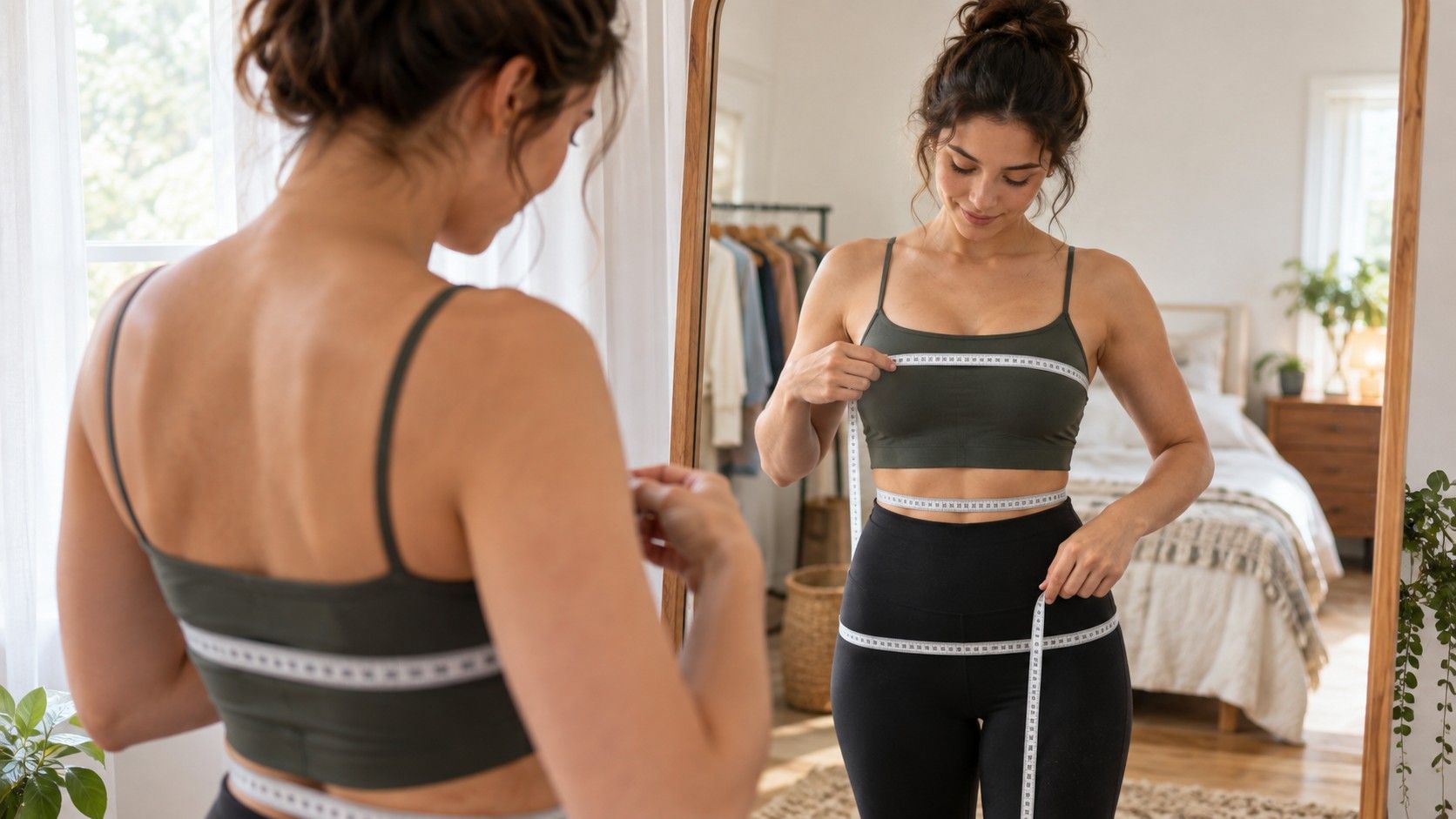
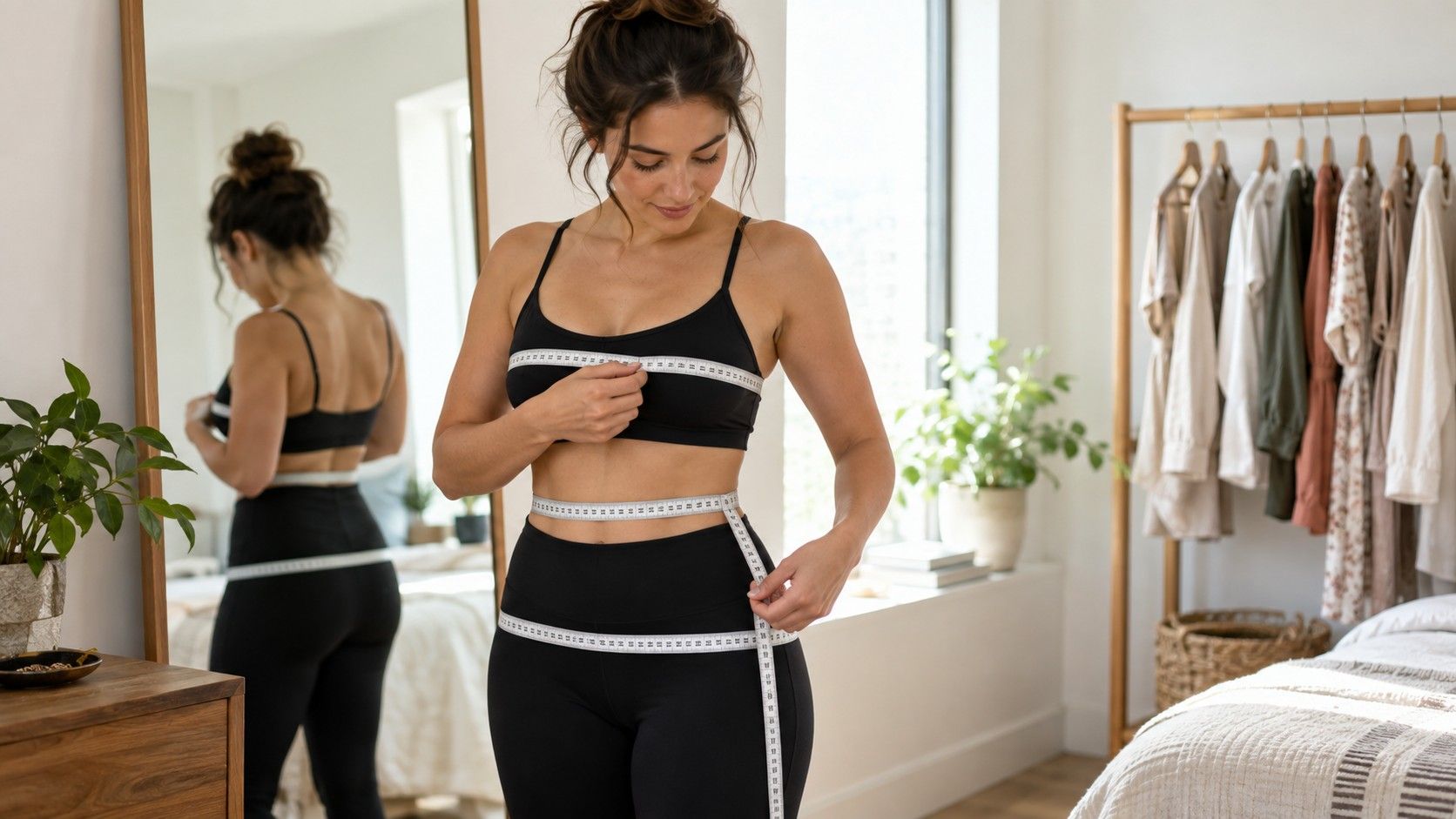
Use a simple comparison rather than measuring yourself into a category. Put on a fitted top with a pair of mid-rise jeans, then swap them for a high-rise pair with a similar leg shape. If the higher waistband feels as though it returns the visual center of the outfit closer to where you expect it, a longer torso may be part of what you are seeing. A shirt that appears unusually long when worn loose, or a blazer that ends well above your widest hip, can offer the same clue. The mirror is only one source of information; comfort while sitting and moving matters just as much.
Check the side seam and the back rise before drawing conclusions. Sometimes a supposed proportion issue is simply a garment with too short a rise or too little room through the hip. If the waistband pulls down at the back, gaps when you bend, or creates pressure after lunch, it is a fit problem. Long torso proportions do not require tolerating bad construction. The right inseam, enough depth from front to back, and fabric that moves with you will do more for the final look than a fashionable label.
Let rise set the waistline you want to see
High-rise trousers and jeans are popular in long torso outfit ideas because they move the visible waistline upward. That can create a compact, leg-forward silhouette, especially with a tucked tee or short knit. But “high rise” is not a universal height. On one person it may sit at the navel; on another it reaches the ribs. Try it while breathing normally and sitting down. If the top edge folds, pinches, or leaves no room for a shirt hem, a slightly lower rise may look and feel better even if the photo in your head promised dramatic balance.
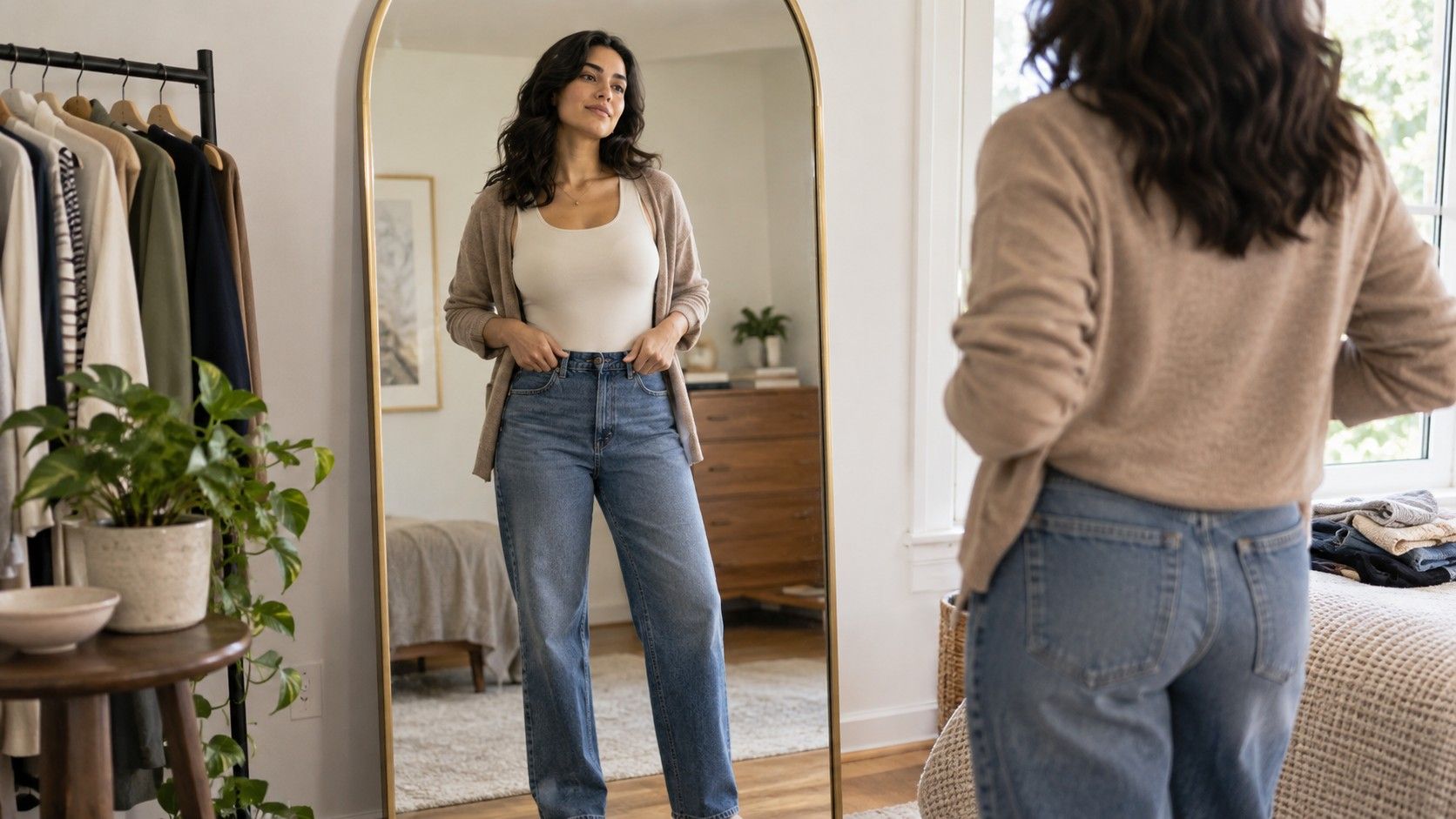
Mid rise is not a compromise or a failure to dress strategically. It can make a long waist look beautifully fluid, particularly with a top that ends near the waistband or is tucked only at the front. Low rise creates another possibility: it extends the torso visually and can suit a deliberately 1990s, relaxed proportion. The issue is not whether a rise is allowed. It is whether the rise, top hem, and shoe create a silhouette you enjoy in ordinary life rather than only while standing still.
| Outfit element | What it tends to emphasize | Worth checking before keeping it |
|---|---|---|
| High-rise trouser | A higher visual waist and longer apparent leg line | Can you sit without pressure or back gaping? |
| Mid-rise straight jean | A continuous, relaxed middle section | Does the shirt hem hit at a comfortable point? |
| Cropped knit or jacket | A clear division close to the waist | Does it stay in place when your arms lift? |
| Waist belt in matching color | Definition without a very sharp contrast line | Does it remain comfortable after a meal? |
Use layers to create rhythm, not disguise
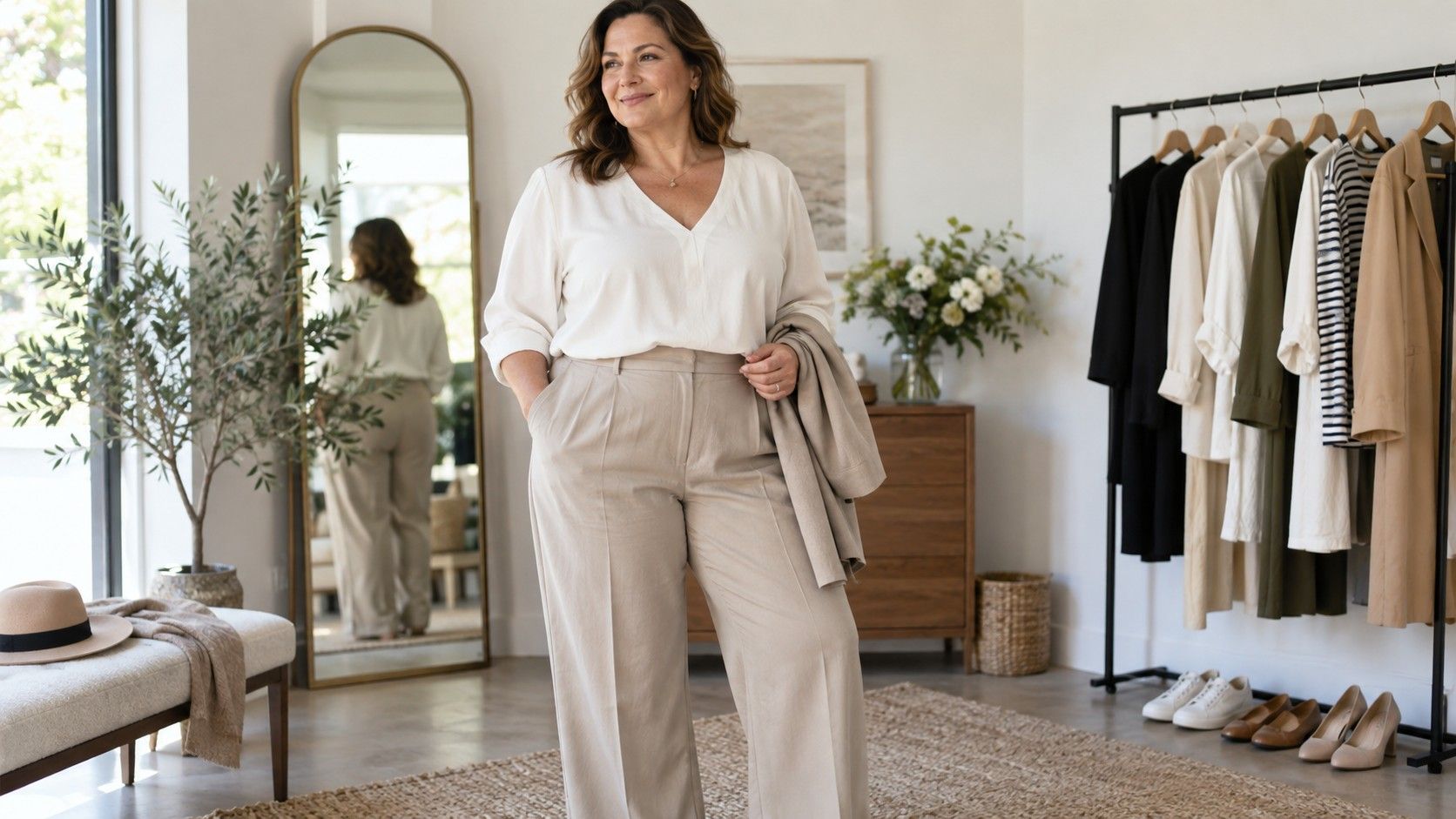
Layer length is often where long torso styling becomes practical. A cardigan that reaches the high hip can add a horizontal pause without feeling cropped. A short jacket paired with high-rise wide-leg trousers creates a stronger change of scale, which can be fun for an evening or a day when you want the waist to look defined. For a quieter office outfit, an open blazer that ends around the hip creates two vertical lines down the center and lets the torso read as long without making it the whole story.
Contrast placement changes the effect quickly. A dark top with light trousers makes the waistband easy to notice; a similar-color top and bottom lets the eye travel through the outfit. Try both with the same pieces. If a high-contrast split feels abrupt, echo one color in your shoes, bag, or light layer rather than abandoning the outfit. That small repetition can make the proportions feel connected. It is more reliable than buying a special “balancing” jacket that only works with one pair of pants.
Make short tops and belts work on your terms
A cropped knit is useful only if its actual hem suits you. The word “cropped” covers everything from just touching the waistband to ending high under the bust, and those are very different garments. In the fitting room, reach for a shelf and then sit down. If the hem rises farther than you like, layer it over a thin tank or choose one with a wider ribbed band. A slightly boxy short knit can look intentional with a high rise; a tight one may pull upward and make you think the entire silhouette is wrong.
A belt is similar: it is a visual punctuation mark, not a compulsory answer to a long waist. A matching belt quietly defines the waist, while a contrasting belt makes a bolder line. With a dress, moving a belt one or two centimeters can change whether it sits at the natural waist, the ribcage, or the high hip. Walk, bend, and let your shoulders drop before judging it. If you keep moving the belt back into position, the garment is asking too much from you.
Build a wardrobe with more than one proportion
There is no reason every outfit has to make the torso look shorter. A longer untucked shirt over slim trousers can be elegant, especially when the shirt has side slits or a soft drape. A low-contrast column dress can celebrate length and feel calm. On another day, high-rise trousers and a tucked shirt can provide the crisp waist placement you want. Keeping both options makes dressing less like correcting a body and more like choosing a mood.
For a useful home test, photograph three outfits in daylight: one with high rise and a short layer, one with mid rise and a front tuck, and one with a long open layer. Review them later, after the changing-room urgency has passed. Notice your posture, whether the pieces pull, and whether you would wear the outfit through a commute or dinner. The version that looks good and needs the least attention is usually the keeper. Long torso proportions are only one part of the picture; ease and personal taste deserve the final vote.