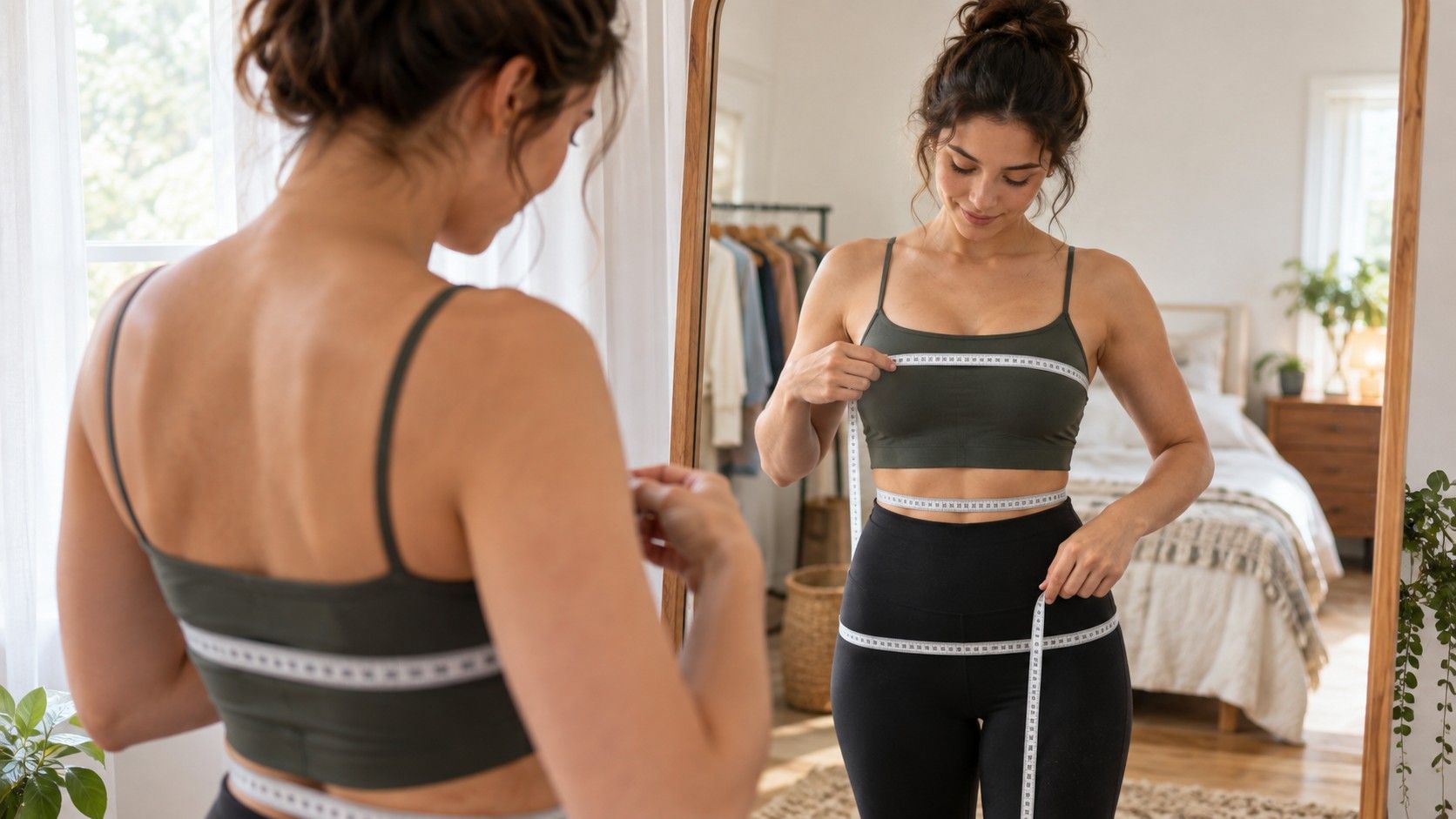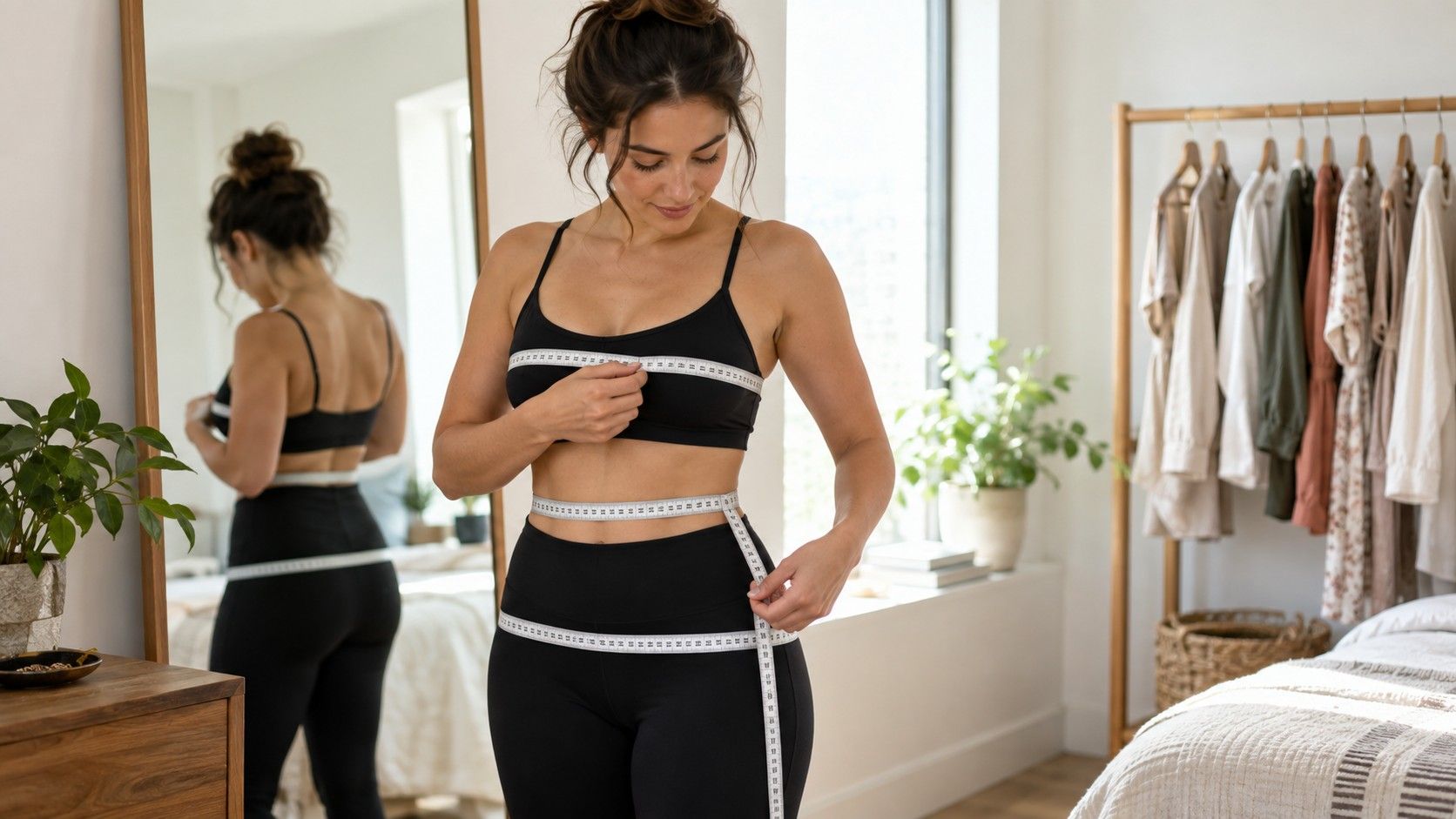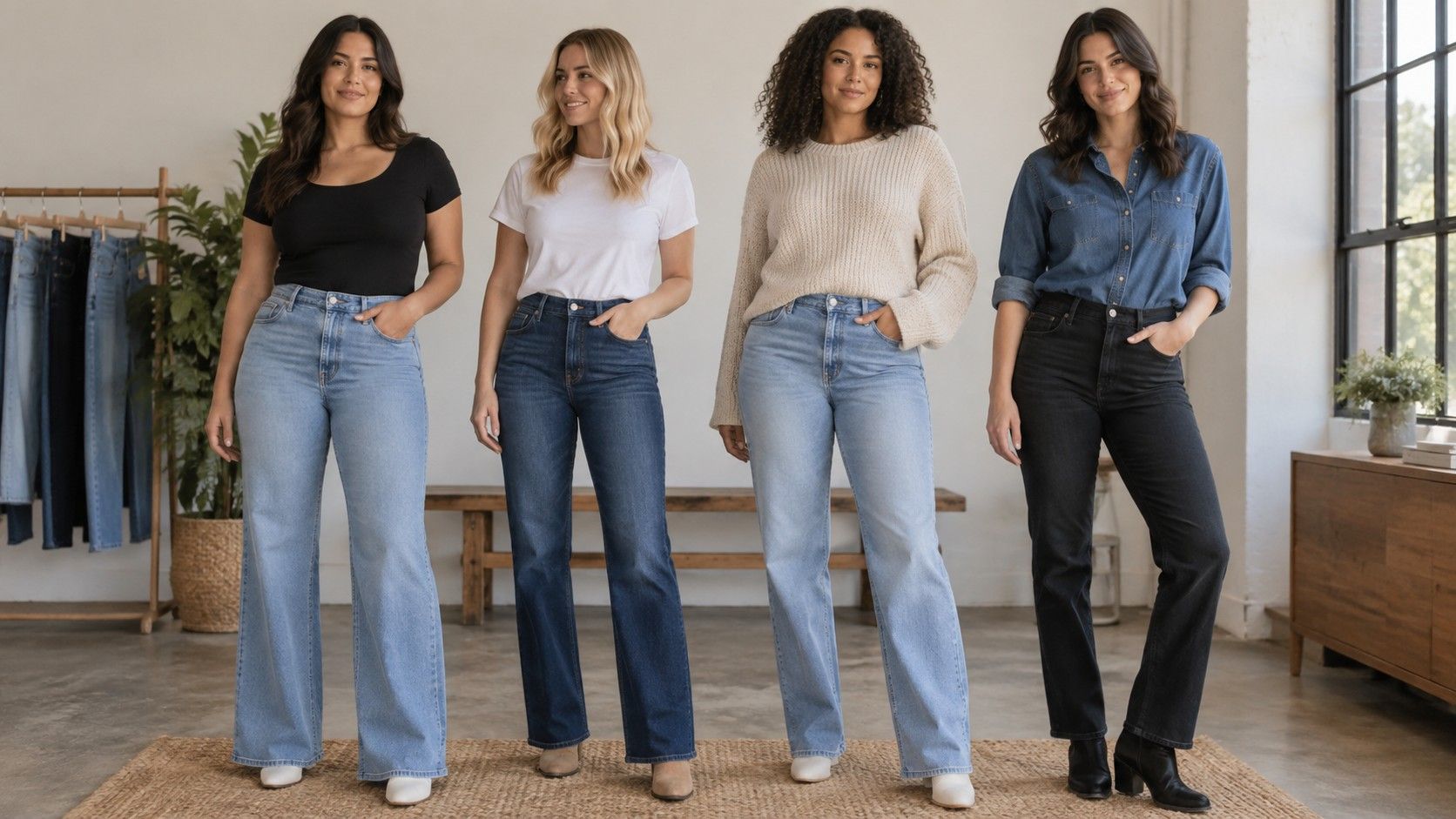
Most jeans for body shape advice starts with a label and ends with a shopping rule. Real denim is less tidy. Two pairs called straight leg can sit at different heights, curve differently through the hip, and break at completely different points on the shoe. The useful way to choose jeans is to read the garment first: where the rise lands, whether the seat follows your body, where the pockets sit, and what the leg does when you walk. Those details tell you far more than a promise that one cut is “flattering.”
Read the jean before the body-shape marketing
Begin with the boring checks because they prevent most expensive mistakes. Fasten the jeans without holding your breath. Sit on the fitting-room bench, bend to pick up a bag, and take a few full strides. The waistband should stay near its intended position instead of rolling, sliding down, or opening at the back. A small waist gap can sometimes be altered, but a pair that fits the waist while pulling sharply across the hip often becomes less comfortable after a few hours, not more.
Then look at the whole silhouette from front, side, and back. Denim may relax with wear, but it rarely changes its basic rise or leg geometry. Horizontal drag lines from the crotch, a seat seam pulled flat, or pockets stretched wide are signs to size or cut differently. Do not let a number on the tag decide the outcome. Many useful jeans fit guides for women forget that brands grade their patterns differently; the size that lets you move naturally is the relevant one.
Compare low, mid, and high rise in motion
Rise can alter the visual location of the waistline, but it should also serve the day you plan to have. High rise can create a defined waist and pair neatly with a short sweater or tucked shirt. On a short torso it may feel too close to the ribcage; on a longer torso it may make a desired waist break. The label is not enough: a “high rise” may sit at the navel on one body and several centimeters above it on another. Try the same top with different rises, then assess where the outfit feels balanced to you.
Mid rise is often the calmest starting point because it leaves room for tucked, half-tucked, and untucked tops. It can also reduce pressure when you sit for long periods. Low rise is not automatically difficult or outdated; it simply creates a lower visual break and asks for attention to back coverage and inseam. Test it by sitting, reaching, and walking past the mirror rather than posing squarely in front of it. If you spend the whole time tugging the waistband into place, the rise is not serving you.
| Jean feature | What to notice | Quick fitting-room test |
|---|---|---|
| High rise | Where the waistline lands and whether it presses when seated | Sit for two minutes with the button fastened |
| Mid rise | Whether the top hem and waistband leave enough space | Try a full tuck and an untucked shirt |
| Low rise | Back coverage and stability through the hip | Bend, reach up, then walk ten steps |
| Pocket placement | Whether pockets lie flat and follow the seat | View the back with a phone timer or mirror |
| Hem break | How the leg meets the shoe in motion | Walk in the shoes you will actually wear |
Choose a leg shape for movement and balance
Straight-leg jeans are versatile because the line from thigh to hem stays relatively even. They can feel structured with a tucked shirt or easy with an oversized knit, depending on the rise and wash. Look at the knee: if the leg twists around it or catches when you climb stairs, the pattern may not suit your movement. A straight leg should not have to be skin-tight to look clean. A little space through the thigh often makes the whole line hang better.
Wide-leg jeans make more visual space below the hip, which can feel balanced with a fitted top, a cropped jacket, or a loose shirt left open over a tank. The practical risk is length. A wide hem that scrapes on the pavement soon looks tired, while one that ends too high can make the proportion feel accidental. Bring the shoes you normally wear, including the flatter pair. Hemming is a normal part of buying jeans; treating an unhemmed length as destiny is an easy way to leave good denim in the closet.
Bootcut and subtle flare cuts widen gently from the knee, often giving the leg a continuous line over a heeled boot or sneaker with some sole. They are worth trying if a very wide leg feels too voluminous but a skinny cut feels restrictive. The flare should begin at a comfortable point below the knee and fall without clinging to the calf. Step sideways and look from the back. A small flare that swings naturally can look understated; a hem that catches on the shoe will demand attention all day.
Do not ignore pockets, yokes, and the back view
Back pockets are not decoration. Their height, spacing, size, and angle change how the seat of the jean reads, but comfort still comes first. Pockets that sit extremely low can visually pull the line downward; tiny pockets set far apart can make a sturdy denim look oddly strained. A useful check is whether the pockets lie flat when you stand normally. If they flare open because the seat is too tight, the issue is fit, not your proportions.
The yoke, the V-shaped seam above the pockets, also matters. A deeper curved yoke can create more definition, while a shallow straight one can read calmer. Neither is better in isolation. Turn around, relax your posture, and use a phone timer if the store mirror is unforgiving. This is not about finding a mathematically ideal back view; it is about avoiding jeans that feel good from the front but become a constant source of self-consciousness the moment you leave home.
Use a repeatable denim fitting-room test
Take three candidates into the room: ideally different rises or leg shapes, not three nearly identical pairs. Wear a top you already own and the shoes closest to your normal routine. First check the waist and hip while seated. Next, walk, squat lightly, and climb a step if there is one. Finally, stand a few feet from the mirror and notice the hem, pocket position, and overall line. Keep notes in your phone: brand, rise, size, inseam, and what worked. After several shops, patterns emerge quickly.
The best jean rise for body type is therefore the one that gives you the waist placement, coverage, and mobility you want with the tops and shoes you actually wear. A pair can be technically on-trend and still be wrong for your commute, your chair, or your tolerance for waistband pressure. Choose the jeans that let you forget about the mechanics after ten minutes. That is a more useful standard than any rigid body-proportion chart.