Inverted triangle body shape style begins with a proportion description, not a problem to solve. The phrase is commonly used when shoulders or the upper torso appear broader than the hips. That can come from bone structure, posture, muscle, sleeve cut, or simply the angle of a mirror. Clothes become easier when you use that observation to check fit and choose an outline you enjoy, rather than trying to make every outfit look narrower on top.
Use the label as a starting point, not a set of restrictions
People use the inverted-triangle description in different ways. For one person it means blazers often pull across the upper back; for another it means a fitted top looks visually strong next to slim trousers. It says nothing reliable about size, health, femininity, or what kind of clothes you should want to wear.
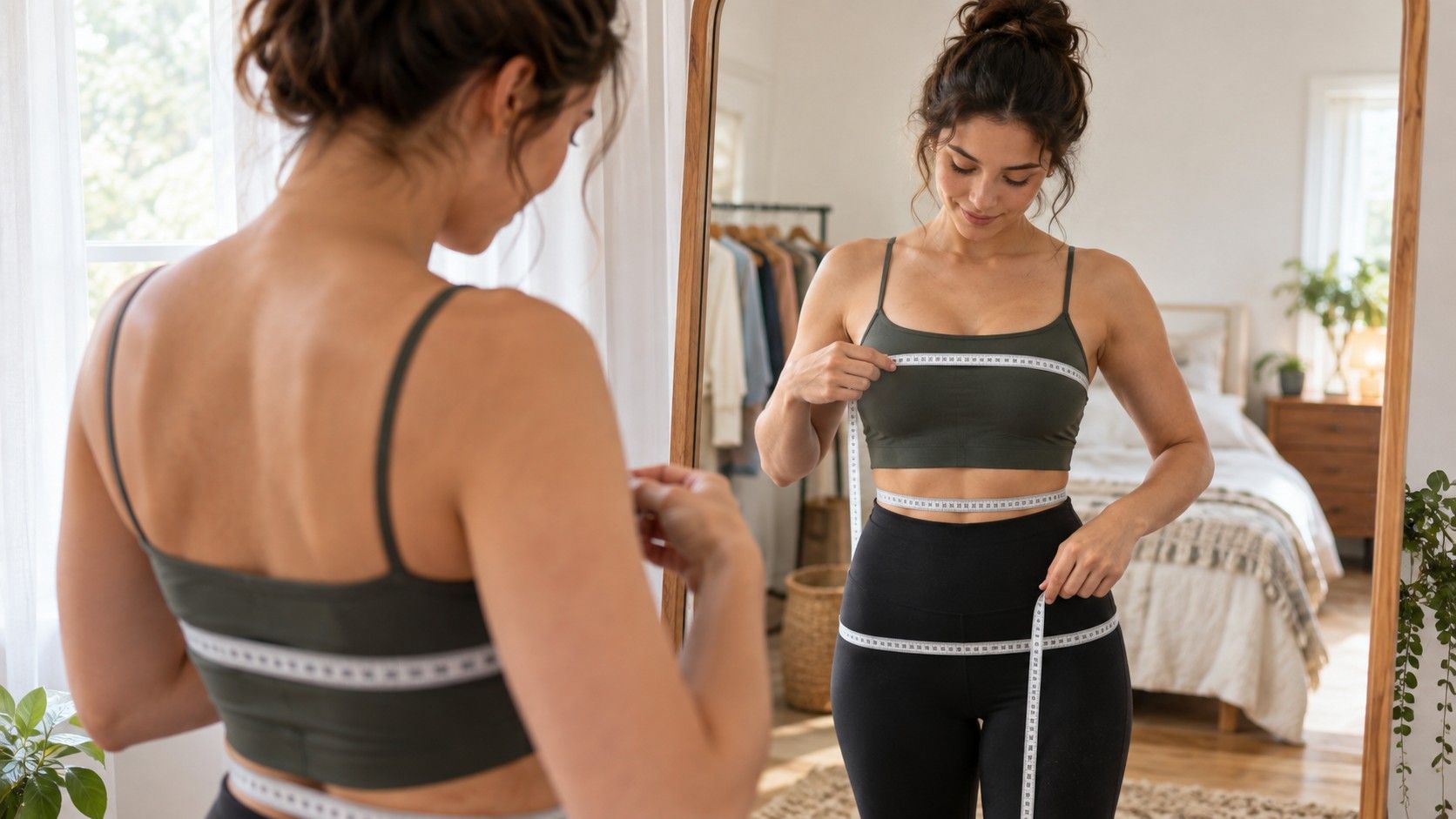
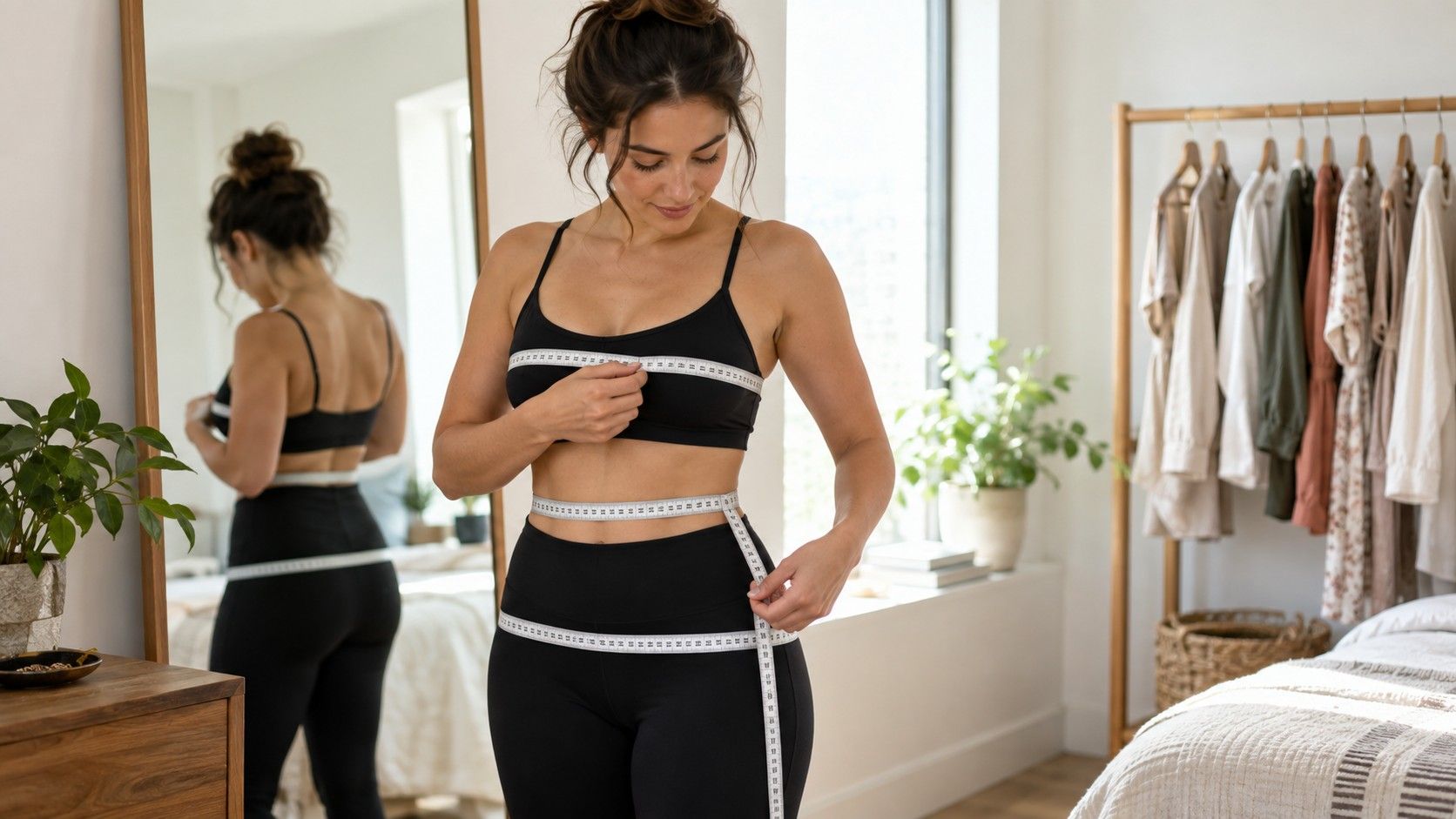
Begin with a simple outfit you already own: a close-fitting tee and trousers with a straight leg. Look at where the shoulder line ends, where the trouser volume begins, and how the waist feels. Then repeat in a loose shirt or a jacket. The comparison tells you whether you respond to actual shoulder width, to stiff fabric, or to an item that is simply cut too small.
This distinction matters because clothes for broad shoulders are often marketed as camouflage. Camouflage is a frustrating goal: it turns every choice into a correction. A better question is whether the garment lets your upper body move and whether its proportions match the mood you wanted that day.
Check shoulder fit before judging the whole garment
The shoulder seam is the first practical check in a shirt, coat, or blazer. On many woven garments it should end near the natural shoulder point, without pulling into the neck or falling far down the arm. A seam that is too narrow can make the chest and sleeves feel restrictive; one that is much too wide can make even expensive tailoring look shapeless.
Raise both arms, reach forward, and sit down. If the back catches or the armhole bites, do not assume a different neckline will fix it. Try the next size, a brand with more room through the upper back, or a raglan sleeve. Raglan and dropped-shoulder cuts can be comfortable, but they create different visual effects, so use the mirror after the movement test.
Soft tailoring is often easier than heavily padded tailoring when you want less emphasis at the sleeve head. That does not mean padded shoulders are forbidden. A structured jacket can look wonderfully deliberate with relaxed trousers or a flowing skirt. The key is to choose the structure because you like it, then make sure the rest of the outfit has enough presence to feel intentional.
Necklines and sleeves change the frame around the face
A V-neck, scoop neck, open collar, and square neck all create different lines between the shoulders. A V-neck adds a downward direction; an open shirt collar introduces a vertical gap; a crew neck can feel graphic and compact. None of these is a mandatory answer for an inverted triangle body shape. Try them with the same bottom so you can see the neckline rather than reacting to a completely new outfit.
Sleeves deserve the same attention. A clean set-in sleeve, a soft raglan, and a dramatic puff sleeve do different things, but comfort comes first. Large gathered sleeves can be a joyful choice if the shoulder seam still allows movement. If you feel crowded around the upper arm, a sleeve with less volume or a softer fabric may be the better version of the idea.
Accessories can alter the frame without changing the garment. A longer pendant, an unbuttoned collar, or a scarf worn loosely creates a vertical accent. A short, substantial necklace creates a compact horizontal focus. These are small choices, so they are useful when you like an outfit but want to tune it rather than rebuild it.
Add lower-half volume when you want a different balance
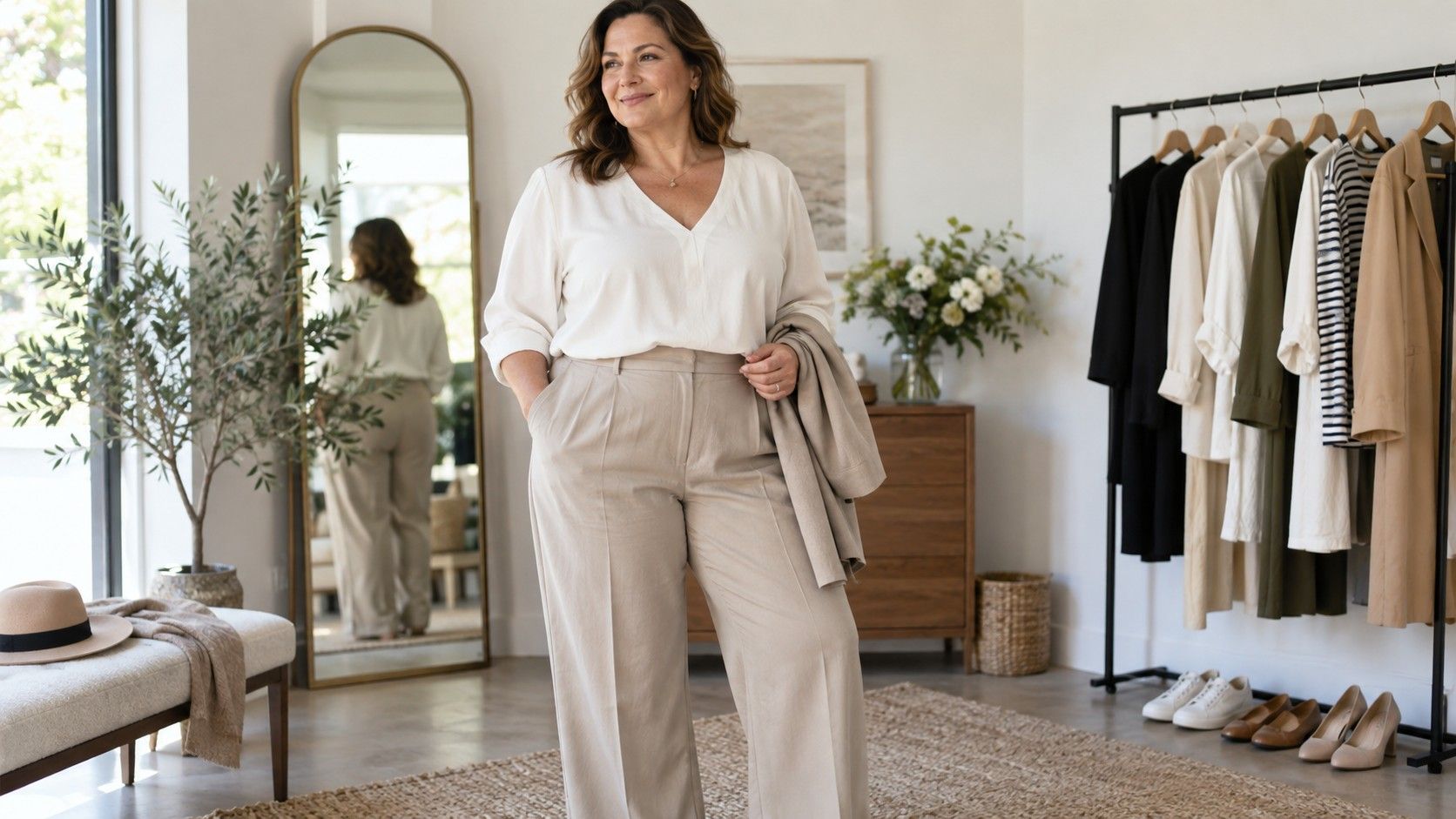
Wide-leg trousers, pleated skirts, A-line dresses, and bootcut jeans all add movement or width below the waist. They are common suggestions for inverted triangle outfits because they can make the lower half feel more present next to a strong shoulder line. They are options, not requirements. A narrow skirt can be just as good if the clean column is what you are after.
With wide-leg trousers, check the rise and length before praising the silhouette. A high rise can give the torso a clear stopping point, while a mid rise may feel less constrained. The hem should work with the shoes you actually wear. Trousers that skim the floor in a fitting room become a nuisance on a rainy commute.
Skirt fullness is another adjustable lever. A gently flared midi offers movement without much bulk; a pleated skirt makes a clearer rhythmic line; a bias skirt follows the hip more quietly. Pair one with a simple knit and walk around at home. If the waistband twists or the skirt rides up, the fabric and cut need attention before any styling theory does.
| Outfit element | Useful practical check | Possible effect |
|---|---|---|
| Soft blazer | Reach forward and check the upper back for pulling | Keeps a tailored line without adding much sleeve-head structure |
| Wide-leg trouser | Test length with your usual shoes and sit at a chair | Adds lower-body movement and visual weight |
| V-neck knit | Check coverage when bending and the shoulder seam placement | Creates a vertical opening through the upper body |
| A-line skirt | Notice whether the waistband stays level when walking | Builds gentle volume from the waist downward |
Put together reliable work and casual formulas
For work, a soft blazer over a V-neck knit or collarless top, with straight or wide-leg trousers, is a flexible starting formula. Keep the shoulder fit precise and let the trouser shape do as much or as little balancing as you prefer. If your office is warm, a sleeveless shell under the blazer may be more practical than a shirt with bulky sleeves.
A dress can simplify the decision. Look for a waist seam, a subtle A-line skirt, or a wrap construction if you enjoy definition, but do not ignore the shoulder and armhole. A dress that accommodates the bust yet gapes at the armhole is not a successful fit. Small alterations can sometimes improve a favorite piece, though a very narrow shoulder pattern is difficult to remake.
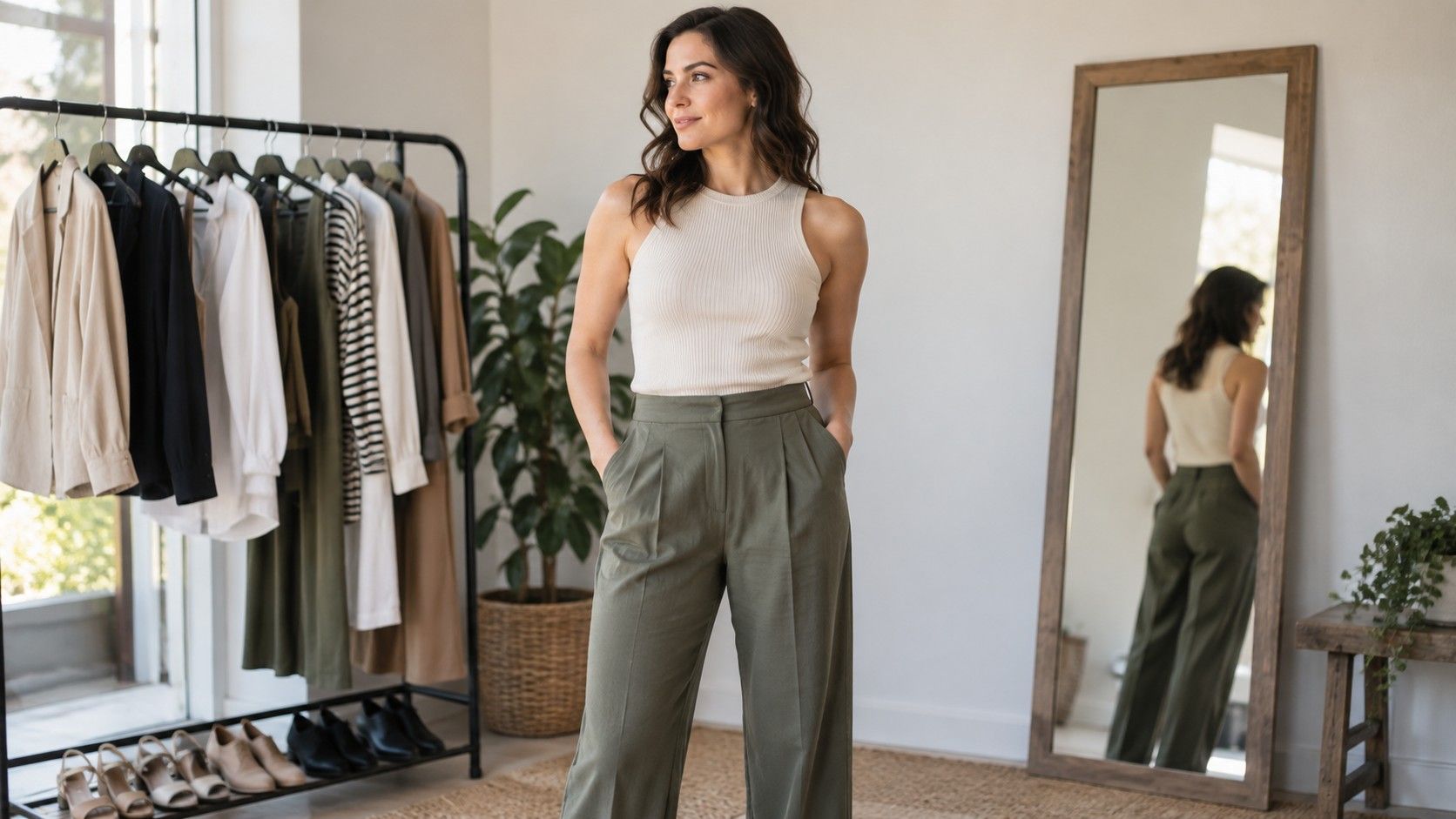
On casual days, try a fitted ribbed tank with relaxed jeans and an open overshirt, or a simple tee with a swishy skirt and sneakers. The open layer adds a vertical line, but it need not be worn every time. A close-fitting top can look direct and comfortable on its own, especially when the bottom has texture, colour, or a shape you enjoy.
Keep the personal part of personal style
The most useful inverted triangle body shape clothes are often the ones that respect your non-negotiables. You may want sleeves that cover the upper arm, trousers that do not cling, a high neckline, bright colour, or a sharp jacket. Write those preferences down after a good outfit day. They are more valuable than a long list of things someone says to avoid.
Use photos sparingly and kindly. A quick picture can reveal that a jacket hem works best with a particular rise, or that a skirt you dismissed has a good walking shape. It cannot tell you whether the fabric felt scratchy, the waistband pinched, or the outfit made you self-conscious after an hour. Your physical experience is part of the evidence.
There is no need to make the shoulders disappear or manufacture a different outline. Good style is often quieter than that: a well-fitting sleeve, a trouser you can move in, and a combination that feels recognizably yours.