Hourglass body shape clothes are often discussed as if one narrow formula will make every outfit work: show the waist, buy a wrap dress, avoid anything loose. Real wardrobes are less obedient. If your bust and hips are comparatively full with a noticeable waist, the useful question is not how to preserve a label. It is where a garment needs shape, where it needs room, and whether it still feels like you after lunch, a commute, and a long day at a desk.
The fit pattern people usually call hourglass
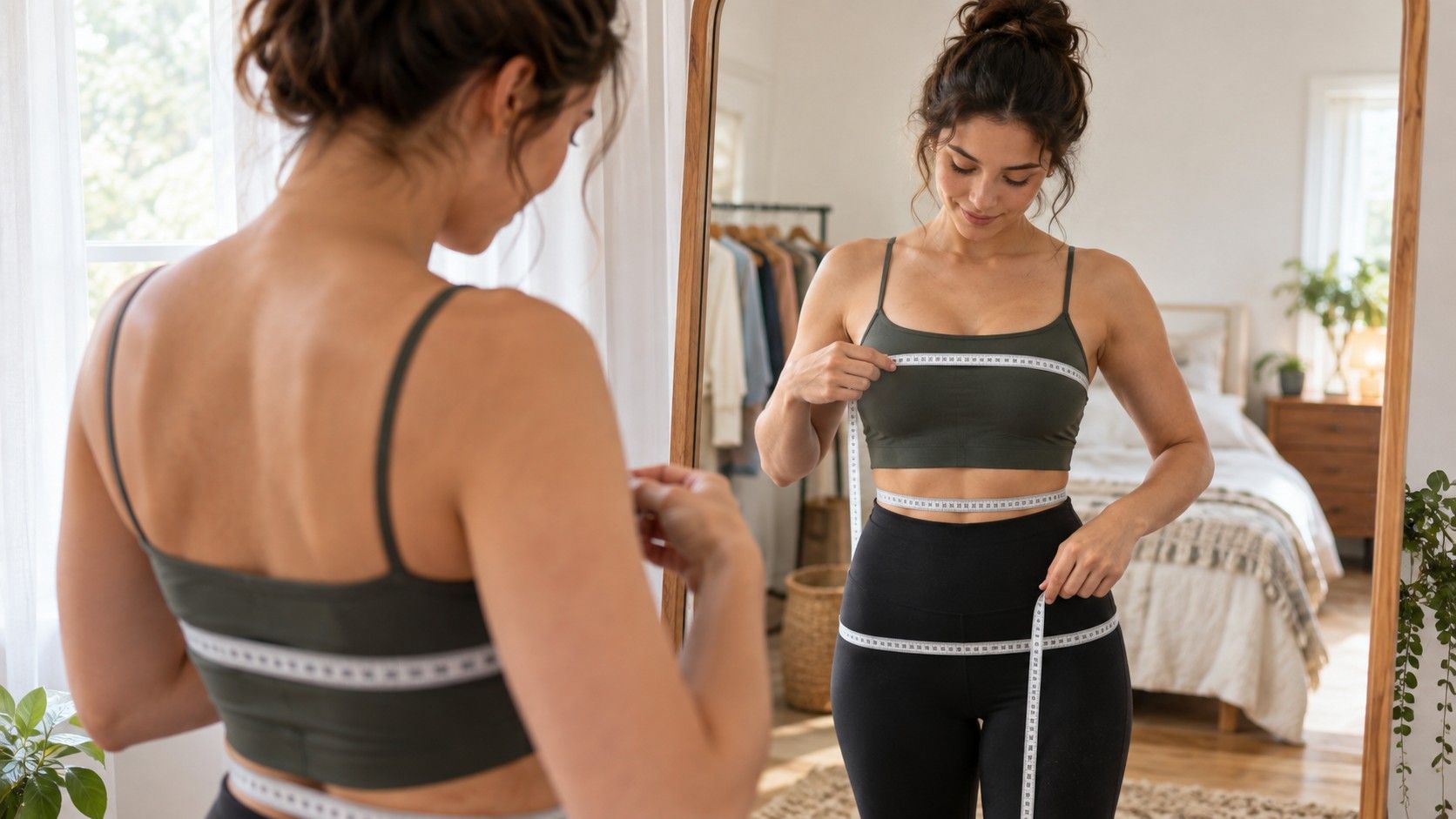
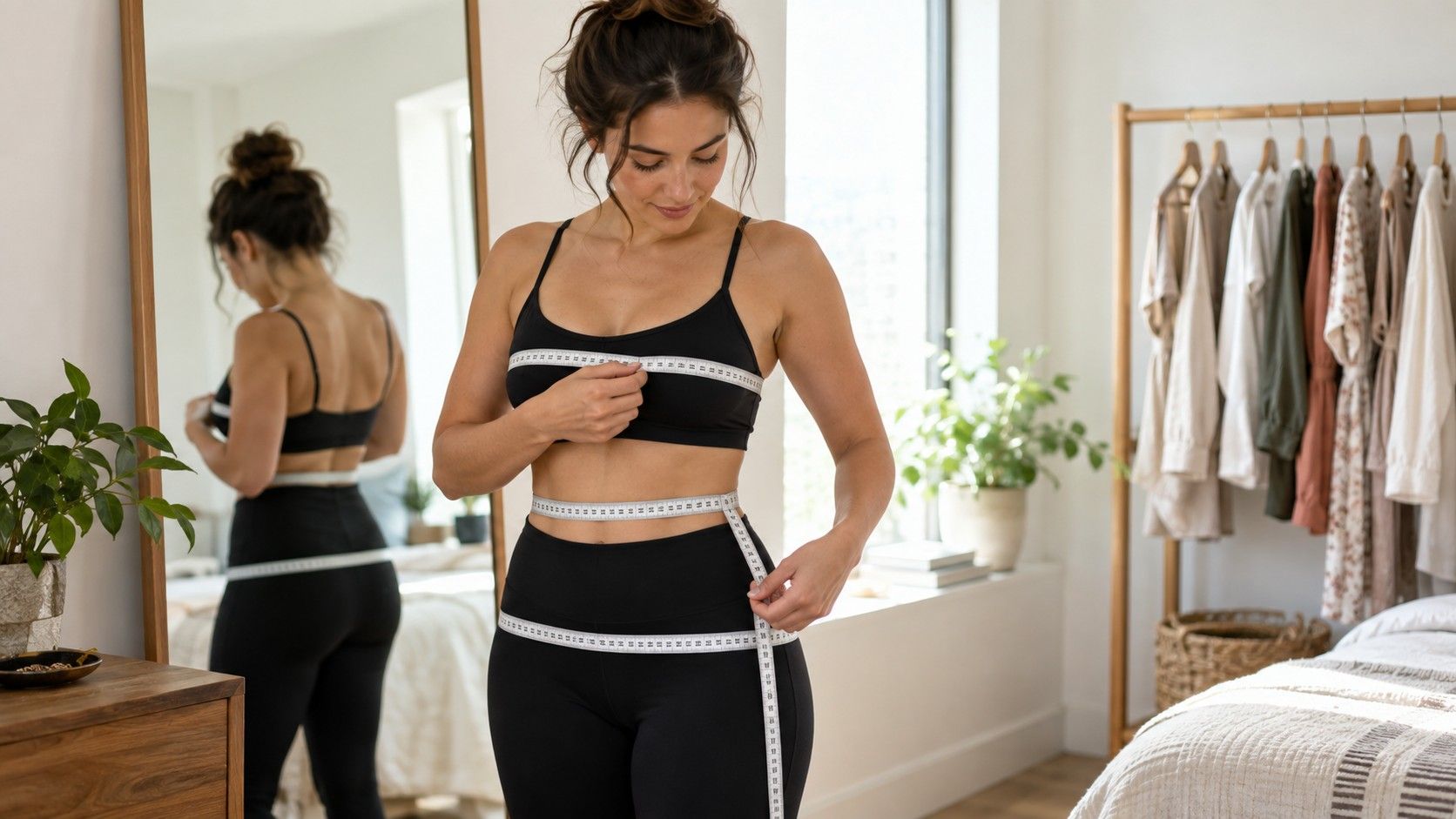
Hourglass proportions usually describe a relationship, not a set of measurements. The bust and hip area may take up similar visual space, while the waist curves in more clearly between them. That can occur on many heights and sizes, and it can change in appearance depending on posture, bra fit, fabric thickness, or the rise of a pair of trousers. A measuring tape may be a starting point, but the mirror in a plain fitted T-shirt often tells you more about where clothes pull or hang.
The label leaves out important variables. A person can have a defined waist and still need extra room through the upper arm, a longer rise, a fuller bust, or a straighter hip line. Those details explain why two people described as hourglass can dislike the same dress. Treat the category as a fitting clue: garments often look most settled when their construction acknowledges the waist without compressing the bust or hips to do it.
Find the waist placement before chasing waist definition
Waist definition is not one thing. A waistband, a belt, a wrap tie, a princess seam, and a cropped jacket can all create it in different places. Start by locating the point where your torso naturally bends when you lean sideways. A dress seam placed there may feel effortless; one set two inches higher can ride up under the bust, while a seam set lower may collapse into the top of the hip. Neither result means the garment is wrong in principle. It means its proportions do not match yours.
In a fitting room, stand normally, then reach for a shelf and sit down. Watch whether the waist seam stays horizontal and whether the fabric above it pulls into diagonal lines. With a fuller bust, a fitted bodice can look polished from the front but open at the buttons when you breathe or move your arms. A little more ease, a different neckline, or a side zip is often more useful than sizing up until the shoulders fall away.
| Garment detail | Useful check | Common compromise |
|---|---|---|
| Wrap dress | The inner panel stays flat and the tie sits at your natural waist. | Add a discreet camisole if the neckline shifts when seated. |
| High-rise trousers | The waistband follows the waist without gaping at the back. | Choose a curvier cut or have the waist taken in. |
| Tailored jacket | It closes without horizontal strain across the bust or hip. | Wear it open and check that the shoulder seam still fits. |
| Belted knit | The belt shapes the outfit without bunching the knit underneath. | Use a softer tie or skip it when the fabric is bulky. |
Trousers and skirts: solve the waist-to-hip gap first
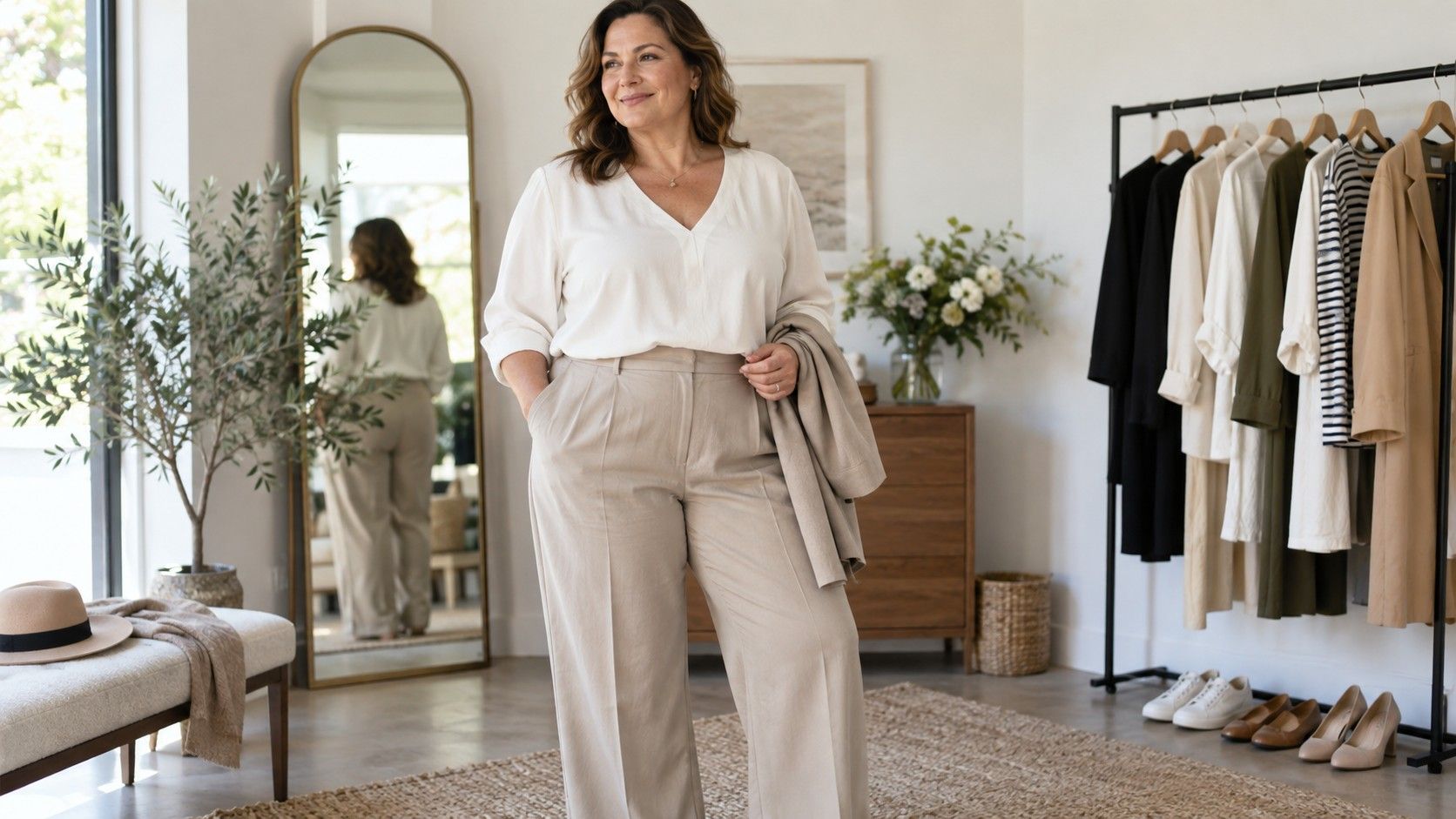
For many people with hourglass proportions, trousers are the most revealing test of a brand's cut. A waistband that fits over the hips may leave a gap at the back; one that fits the waist may feel tight through the seat or upper thigh. High-rise trousers can be excellent hourglass outfit ideas because they provide a clear anchor, but only if the rise is long enough. A short rise can press into the body when you sit and make an otherwise good outfit feel like a negotiation.
Look at the side seam as well as the front. If it is pulled forward, the hip needs more ease; if the crotch folds sharply, the rise or fabric recovery may be the issue. Straight-leg, wide-leg, and gently tapered shapes can all work. The reliable choice is the one that lets the fabric fall from the widest point rather than clinging there. A tailor can often adjust a waistband, but cannot create room in a seam with no allowance, so inspect the construction before buying sale trousers on hope.
Skirts offer a similar lesson. A-line styles skim cleanly when the waistband is stable, while pencil skirts need enough walking ease and a back vent that actually opens. A bias-cut midi can follow the body beautifully, but thin fabric may catch on underwear or change shape through the day. Walk ten steps, climb a stair, and sit before deciding that a mirror view is enough. Clothes for an hourglass figure should be allowed to behave like clothes, not like a still photograph.
Dresses work best when the fabric understands the body
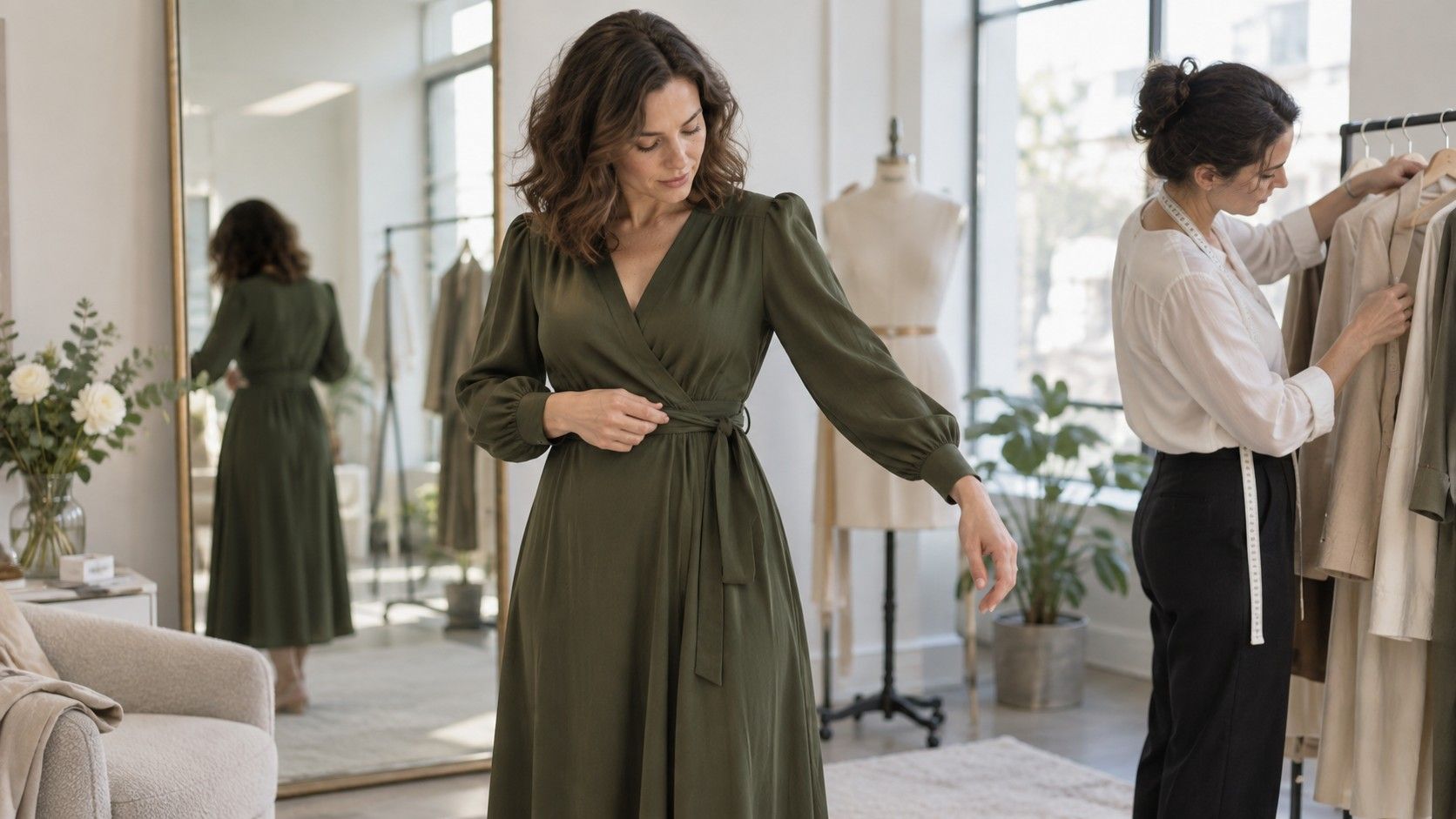
A wrap dress is popular for good reasons: its tie can accommodate small changes in fit, its V-neck often creates a clear vertical line, and its waist is adjustable. It is not universally easy. Some wraps have a very narrow front panel, leaving the skirt to separate when you walk; others use stiff jersey that twists at the side seam. Check the overlap at the thigh and the inner fastening. A small snap or a better-made tie can matter more than the name of the dress shape.
Fit-and-flare, shirt dresses, knit column dresses with shaping, and softly tailored sheaths can be equally useful. The decisive element is often fabric drape. A heavier ponte holds a smooth line but may feel warm; a fluid woven fabric moves beautifully but may need a slip; rib knit can highlight every change in tension. When trying a dress, turn sideways and raise your arms. If the waist disappears only when you move, consider whether you want more flexible fabric rather than more visible shaping.
Jackets and layers should frame rather than fight the waist
A tailored jacket can give structure to an hourglass body shape style without requiring a tight top underneath. The shoulder seam should end near your shoulder point, and the lapel should lie flat before you worry about whether the jacket nips in dramatically. When the shoulder is too wide, the whole piece slides back and makes the waist shaping sit in the wrong place. When the hip is too narrow, closed buttons pull even if the bust fits perfectly.
Open layers are useful when you want a straighter outline for contrast. A long cardigan, an unbuttoned shirt, or a relaxed blazer can create two vertical lines while a fitted tank or tucked tee gives the middle of the outfit a reference point. The practical test is to look at the back. If the layer catches at the fullest point of the hip and flips outward, a slightly shorter hem or a side-slit style may hang better. There is no obligation to wear every layer belted simply because a style rule says you can.
Adapt trends by keeping one anchor of fit
Oversized shirts, wide trousers, boxy knits, and loose dresses are not off limits. They simply benefit from one deliberate anchor: a sleeve rolled to reveal the wrist, a half-tuck, a shorter jacket over a fuller skirt, or trousers with a stable waistband. The anchor does not have to be the waist. A sharp shoulder, an open neckline, or a clean ankle can make a relaxed outfit feel intentional without turning it into a body diagram.
Try trends in a low-risk version first. Pair wide jeans with a familiar fitted tee, or wear an oversized shirt open over a tank you already know fits. This separates the new silhouette from the uncertainty of a completely new outfit. It also makes shopping less punitive. If a garment only works when you hold your breath, arrange your hair a certain way, and stand still, it is not a sophisticated challenge; it is poor information about fit.
A fitting-room routine that makes style rules quieter
Bring the shoes or bra you expect to wear most often with the item. Put the garment on, then give yourself five minutes before checking the mirror again. Notice where you tug: at the neckline, the waistband, the hem, or the buttons. Those habits are better evidence than a salesperson's promise that fabric will relax. Photographing the front, side, and back can help, especially with jackets and trousers, because you see tension lines that are easy to miss while turning in a small mirror.
The most useful hourglass outfit ideas leave space for your preferences. You may love a sharply belted dress, a relaxed linen shirt, or a minimal straight silhouette. Keep the fit checks that protect comfort: a waist seam in the right place, enough room through bust and hips, and fabric that recovers after sitting. Then ignore the rule that asks you to make your body look like a particular outline. A good outfit supports the movement you already make; it does not demand a performance from you.