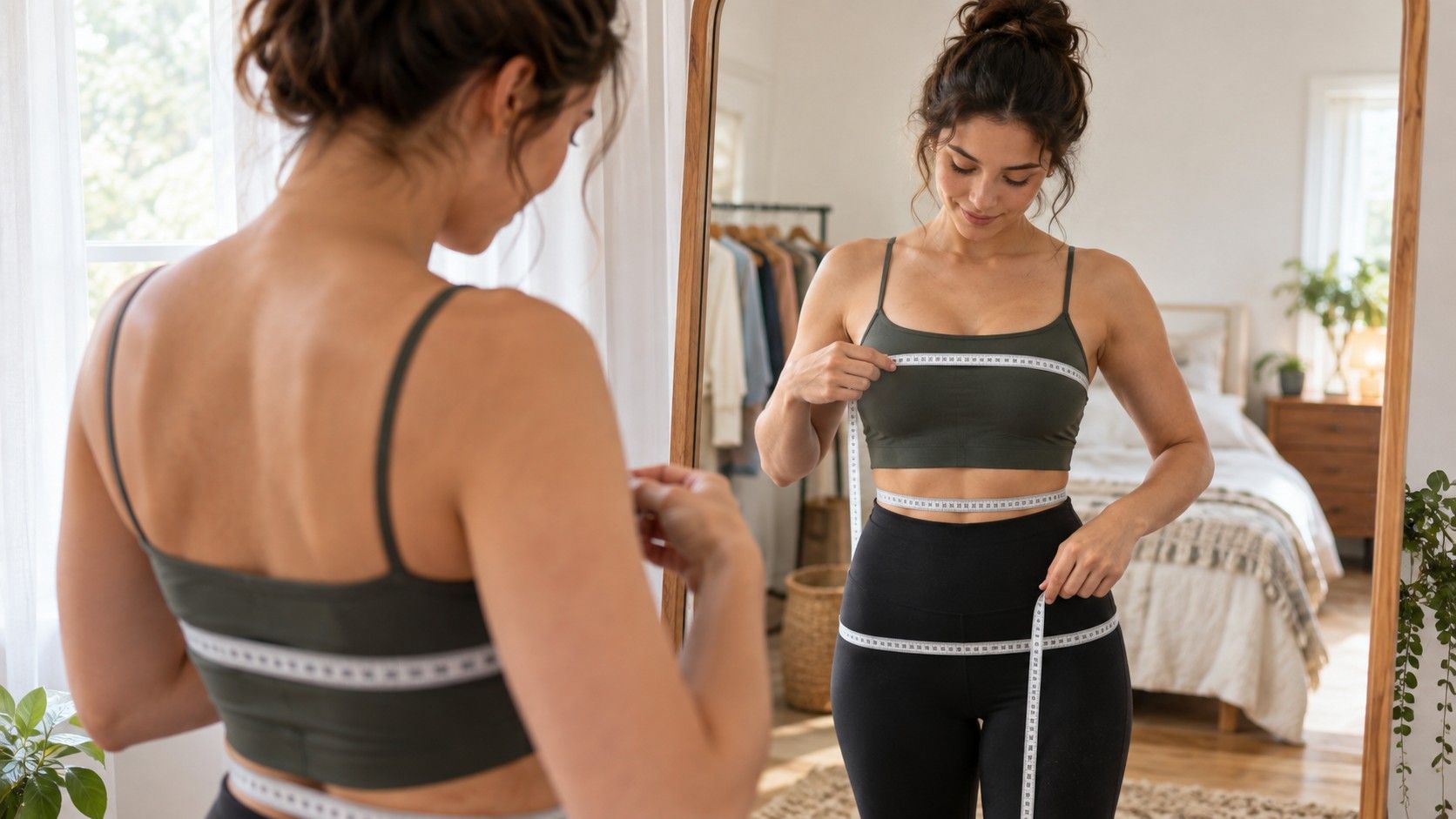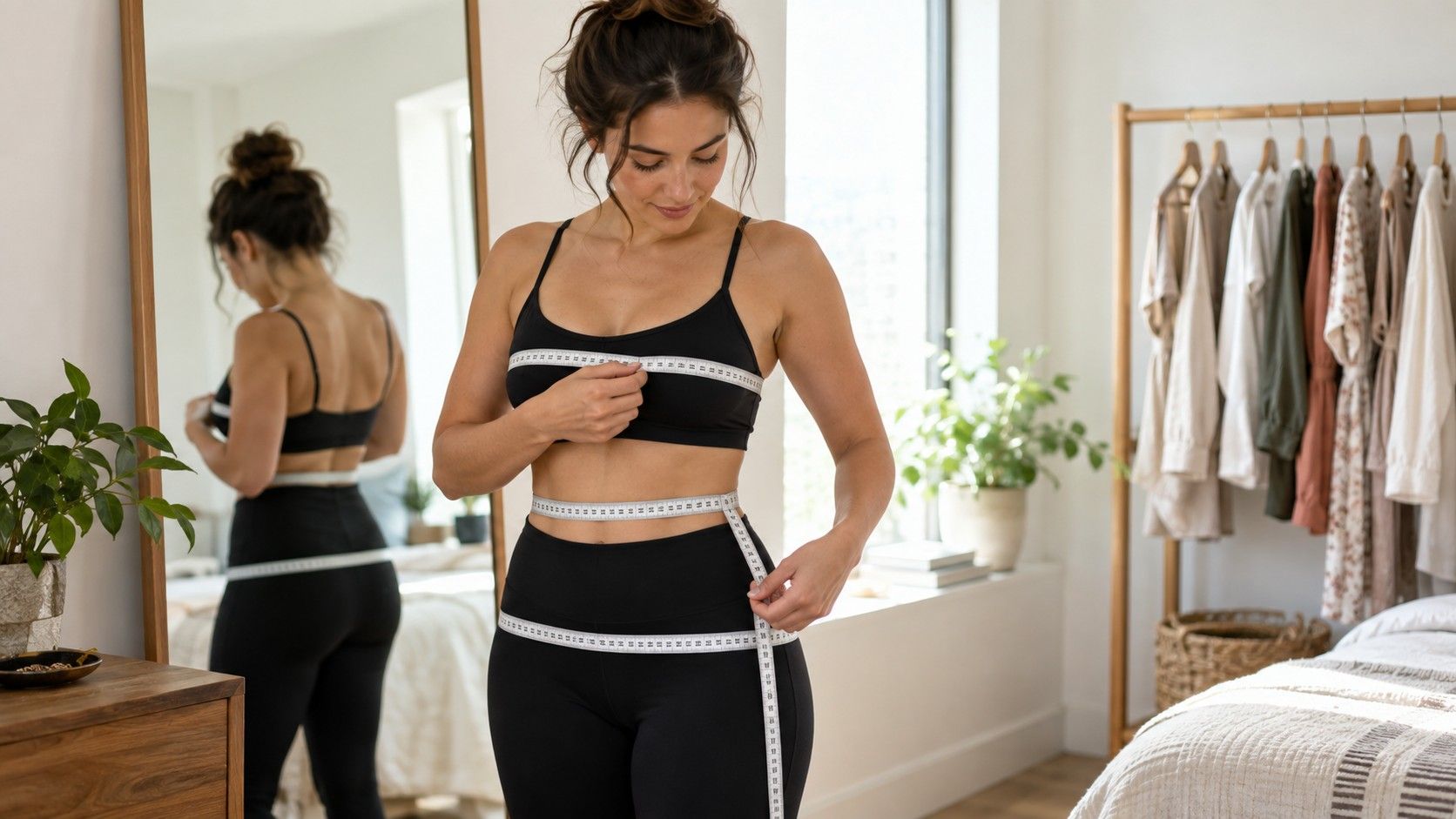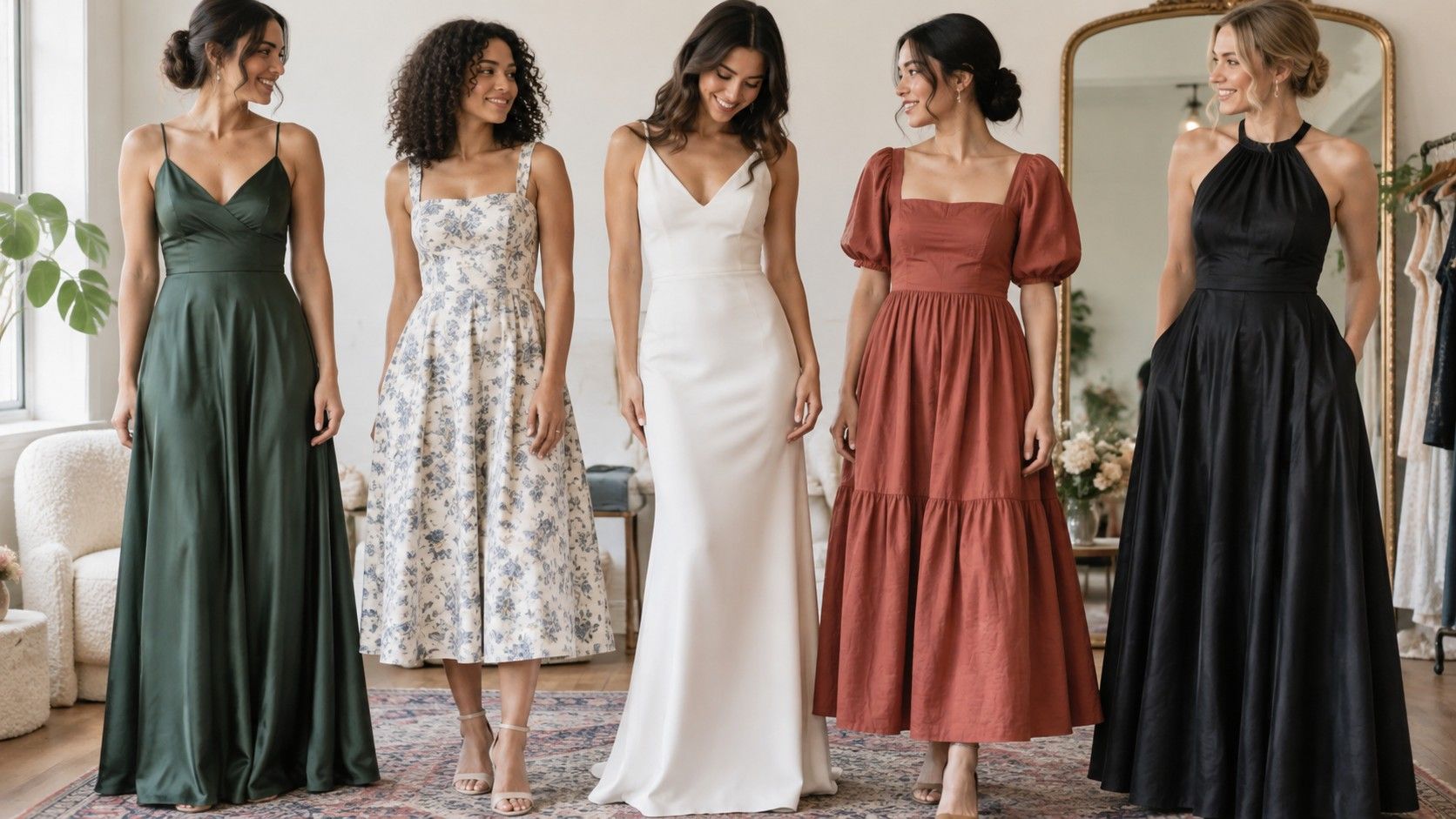
A dress can look convincing on a hanger and become oddly argumentative the moment it is on a moving person. The useful question is rarely whether a silhouette is allowed for a body type. It is whether its shoulder line, waist placement, volume, and fabric give you enough room to stand, sit, and recognize yourself in a mirror that is not doing you any favors.
Why a dress name tells only part of the story
Labels such as wrap, shift, sheath, and fit-and-flare describe a starting shape, not a promised result. Two wrap dresses can behave like entirely different garments: one has a firm woven front panel and a high tie; another is a soft jersey tube with a loose overlap. Calling both of them a wrap dress says less than checking where the V-neck stops, whether the waist seam sits on your actual waist, and how much fabric crosses the front when you walk.
Body-shape language can be useful as shorthand for proportions you notice often: a comparatively long torso, a fuller bust, straight hips, broad shoulders, or a short waist. It becomes unhelpful when it turns into a veto. A person with wider shoulders may enjoy a square neck because it feels clean and balanced, while another may find the same neckline restrictive because the shoulder seam is cut too narrowly. The garment is the evidence; the category is only a hypothesis.
When comparing dress silhouettes for body shape, begin with the places that have to work mechanically. Check the shoulder seam before judging the skirt. Check bust ease before deciding whether a waistline is flattering. A dress that needs constant pulling at the neckline will not become more appealing because its skirt is theoretically the right shape.
Start at the shoulders, bust, and waist seam
Shoulders establish the frame for the rest of a dress. A seam should generally sit near the shoulder point rather than slide down the arm or pull toward the neck. With sleeveless styles, raise both arms and let them fall. If the armhole bites or the front shifts sideways, the problem is fit, not your proportions. This test is especially useful with fitted bodices, where a small shortage across the upper chest can make the waist seam appear too high.
Next, look at the waist seam as a horizontal line rather than a moral instruction to emphasize a waist. An empire seam, a natural-waist seam, a dropped waist, and an unseamed shift all create different divisions. A natural seam can make a torso feel organized when it lands where the body bends. The same seam can feel fussy if it cuts across the fullest part of the bust or presses into the ribs after lunch. Try sitting for two minutes; a fitting-room pose gives very little information about that.
Bust ease matters more than many dress charts admit. In a button-front shirt dress, inspect the gap between buttons while you reach for a bag. In a woven fit-and-flare, check whether the bodice stays smooth without flattening or lifting. If the garment fits everywhere except one area, sizing up may create loose shoulders and a floating waist. A different cut, a fuller bust dart, or a tailoring adjustment is usually a better answer than blaming your body for failing a standard pattern.
Compare skirt shapes by movement, not by labels
The skirt starts its conversation after the bodice has earned the right to be there. A straight skirt follows the hips and thighs with relatively little extra width. It can feel elegant and easy in a fabric with some give, but a stiff pencil shape that rides up while walking is simply asking too much. An A-line skirt adds width gradually and often gives the legs room without creating a large visual statement at the waist.
Fit-and-flare dresses concentrate the change at the waist: close through the bodice, then fuller below. That contrast can be satisfying when you like a defined middle, but it is not compulsory. If the skirt begins too high, it may make the bodice feel abbreviated; if it begins too low, it can look heavy or swing from the hips in a way you do not enjoy. Turn sideways and walk a few steps. The useful version moves with you rather than arriving half a second later.
Column and slip dresses rely more on drape. They may skim the body, hang away from it, or catch on static and underwear depending on the fabric. A slip dress is not automatically a minimal, universally easy option: bias-cut satin can grip the hips while leaving the waist loose, and thin straps can make support difficult. A looser column in matte crepe may feel much calmer, even though both are often placed in the same mental drawer.
| Silhouette | Useful fitting check | Common issue to notice |
|---|---|---|
| Shift | Reach forward and sit down | Armholes or upper back pull despite a roomy body |
| Wrap | Walk, bend, and check the overlap | Front opens or tie drifts above the natural waist |
| Fit-and-flare | Check the seam from front and side | Bodice is short or skirt starts at an awkward point |
| Sheath | Take a normal stride and sit | Hem climbs, lining catches, or hips restrict movement |
| Slip or column | Assess it in daylight and motion | Bias fabric clings unpredictably or straps lack support |
Fabric changes the same silhouette more than expected
A structured cotton poplin fit-and-flare holds air between the body and the skirt. A viscose version with the same seam placement may fall closer and reveal every shift in posture. Neither is more correct. They solve different practical problems: the first gives shape and keeps its distance; the second follows movement and may need more attention to underlayers.
Drape is worth testing with your hands before you even enter the fitting room. Scrunch a small section, let it drop, and notice whether it springs away, folds sharply, or clings. Heavy ponte and substantial knit can make a sheath feel forgiving but warm. Crisp linen can create a relaxed outline while wrinkling immediately at the lap. Thin jersey can be comfortable until a skirt twists after ten steps. The composition label is useful, but the behavior in that particular garment is more useful.
Lining is another quiet variable. A well-made lining lets a skirt move over tights or bare legs instead of grabbing. A stiff lining can pull the outer fabric into strange ridges, especially in a narrow sheath. In lighter colors, step near a window or use a phone flashlight behind the skirt to check opacity. This is not vanity; it prevents discovering that a dress becomes transparent under noon sun after the return window has closed.
Hem length is a proportion decision and a movement decision
Hem length changes when you sit, climb stairs, and wear the shoes you actually own. A midi that ends at the narrowest part of the calf may feel graceful to one person and visually stubborn to another. Instead of memorizing a rule, take a front and side photo from several steps away. Compare it with a hem two inches higher or lower if the dressing room allows. Small changes are often more persuasive than a dramatic new silhouette.
Pay attention to the relationship between hem, shoe, and skirt volume. A full midi skirt paired with a very flat, delicate shoe can feel intentionally soft; with a heavy boot it may become grounded and practical. A short shift dress needs enough length that you do not stop reaching for shelves. A long straight dress needs enough vent or stretch to let you take an ordinary stride. The mirror cannot tell you that; a corridor can.
For dress fit by body proportions, it helps to separate visual preference from comfort preference. You may like the longer vertical line of a maxi but dislike the extra fabric around your ankles on public transit. You may prefer a knee-length hem because it works with your life, not because it performs a particular balancing trick. Those are valid criteria, and they tend to produce clothes that stay in rotation.
A fitting-room sequence that produces better answers
Take three sizes or two neighboring sizes when possible, then start with the one that fits the least adjustable point: usually shoulders, bust, or hips. Do not decide from the number on the tag. Once the bodice is stable, assess the waist seam and skirt. If you are comparing dress shapes for body type, bring two versions of the same idea rather than ten unrelated dresses: for example, a wrap and a faux wrap, or a shift and an A-line in similar fabric.
Move in a short sequence: lift your arms, sit, walk, bend slightly, and look at the garment from the side. Notice where you make automatic adjustments. Pulling a neckline closed, smoothing a skirt, or tugging the shoulder straps once may be normal. Doing it after every movement is information. It tells you the dress is creating a maintenance job.
Finally, ask a plain question: would you choose this dress on a day when you are not prepared to manage it? The most useful silhouette is not the one that follows a body-shape diagram most faithfully. It is the one whose seams, fabric, and volume allow your proportions to exist without a running commentary.